

Mixed Media / Surreal Noir
by Gary Thompson
Echoes of a Graffiti Heart
The Forensic Report
An emotion is not a single event. It is a violent triptych. Gary Thompson abandons the clean lines of digital noir and plunges his hands directly into the paint, into the very viscera of feeling. This is Mixed Media as a psychological excavation.
A triptych. A story in three acts. The birth of an emotion in primordial chaos, its violent zenith against a concrete wall, and its inevitable decay into a million digital shards. This is not a love story. This is the forensic report of a soul after impact.
A triptych. A story in three acts. The birth of an emotion in primordial chaos, its violent zenith against a concrete wall, and its inevitable decay into a million digital shards. This is not a love story. This is the forensic report of a soul after impact.
This is Gary Thomson at his most visceral. The physical texture of paint is the raw emotion. The digital glitch is the fractured memory. Together, they create a chillingly honest portrait of what it means to truly feel — and to survive the wreckage.
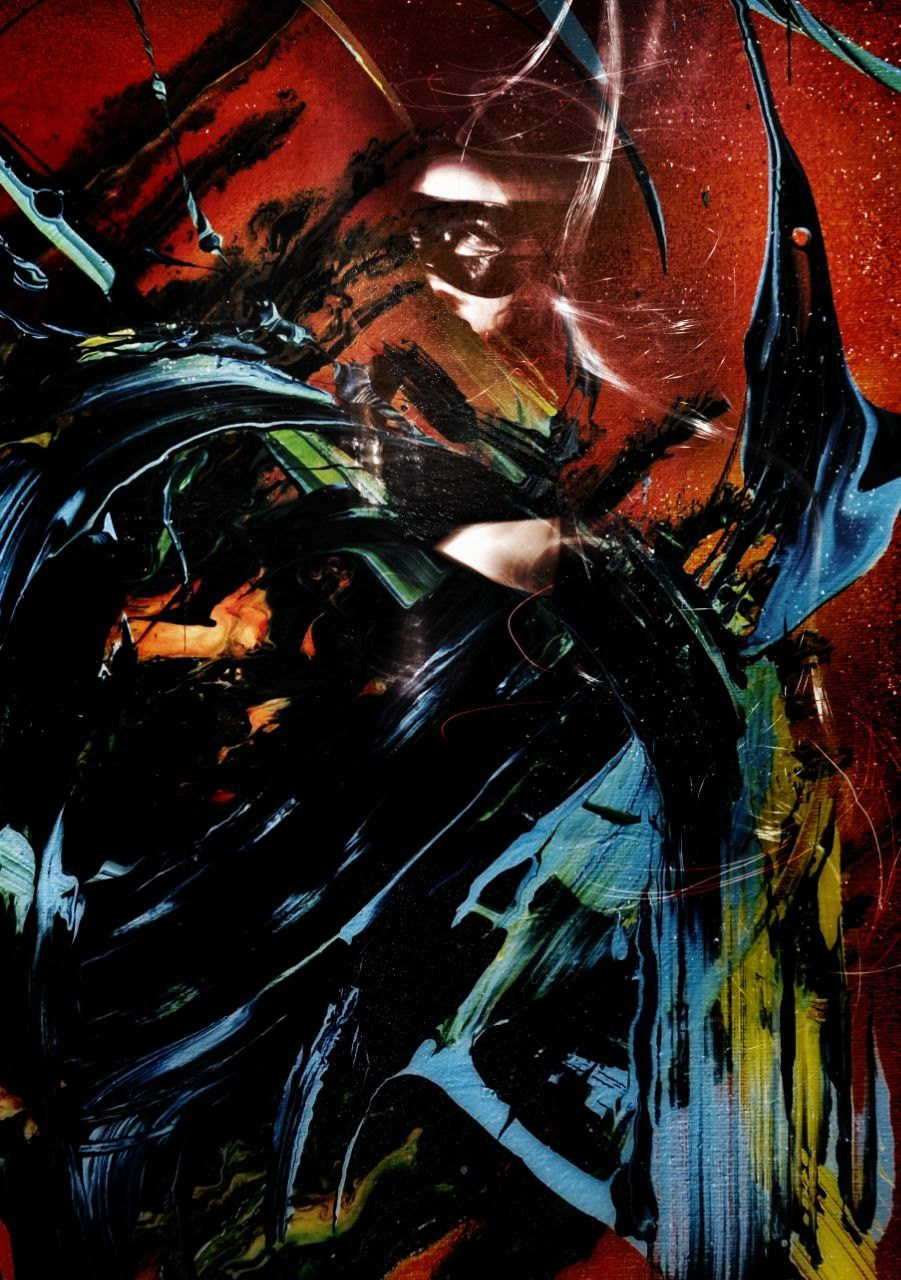
I. THE GENESIS
It begins in fire and oil. A scream of color before a face has even formed. This is the primordial state of passion — chaotic, undefined, terrifying. A phantom silhouette emerges from a maelstrom of black and crimson brushstrokes, a ghost trying to assemble itself from the raw material of the subconscious. It is the moment before the storm.

II. THE APEX
And then, the impact. The emotion finds its symbol: a heart. But this is not a delicate valentine; it is a raw, red wound scrawled on a concrete wall, bleeding through layers of urban decay. The body, caught in motion blur, surrenders to it. Is she in ecstasy or agony? She is crucified against her own feeling, a fleeting moment of pure, blinding surrender. This is the zenith. The single, deafening beat of the graffiti heart.

III. THE ECHO
And then, the aftermath. The self is shattered. The memory of that zenith is now a corrupted file, a multi-layered ghost. The figure is fragmented, wrapped in the digital cellophane of a decaying thought, trapped between worlds. The face from the genesis returns, but it is multiplied, distorted, lost in the noise. This is the echo — the haunting realization that the most intense moments leave us forever fractured.
Hymns from the Concrete
A diptych is a conversation. In Hymns from the Concrete, Gary Thomson orchestrates a chilling dialogue between an environment and its inhabitant, between the prison and its soul. This is not a story told in sequence, but two truths revealed simultaneously.
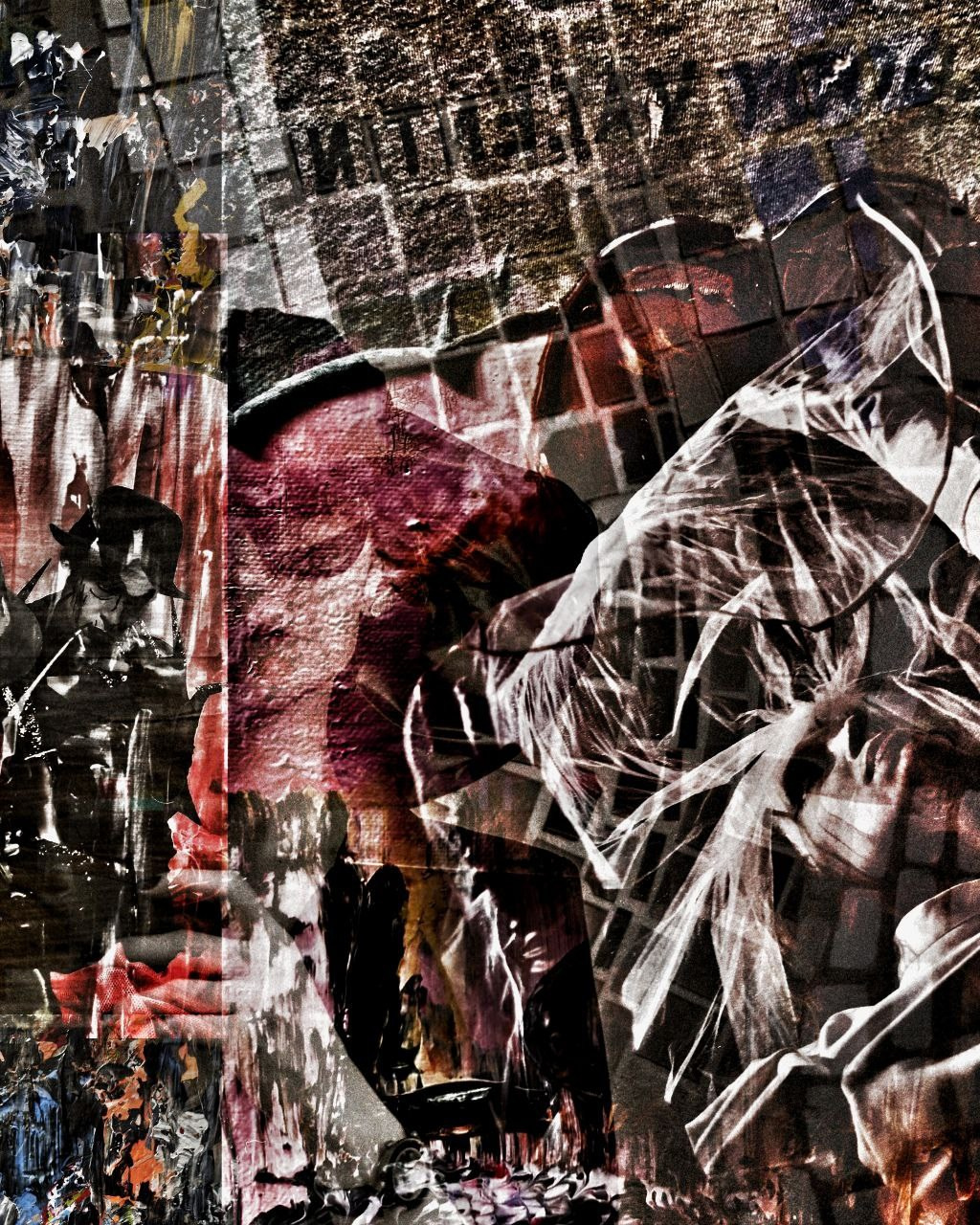
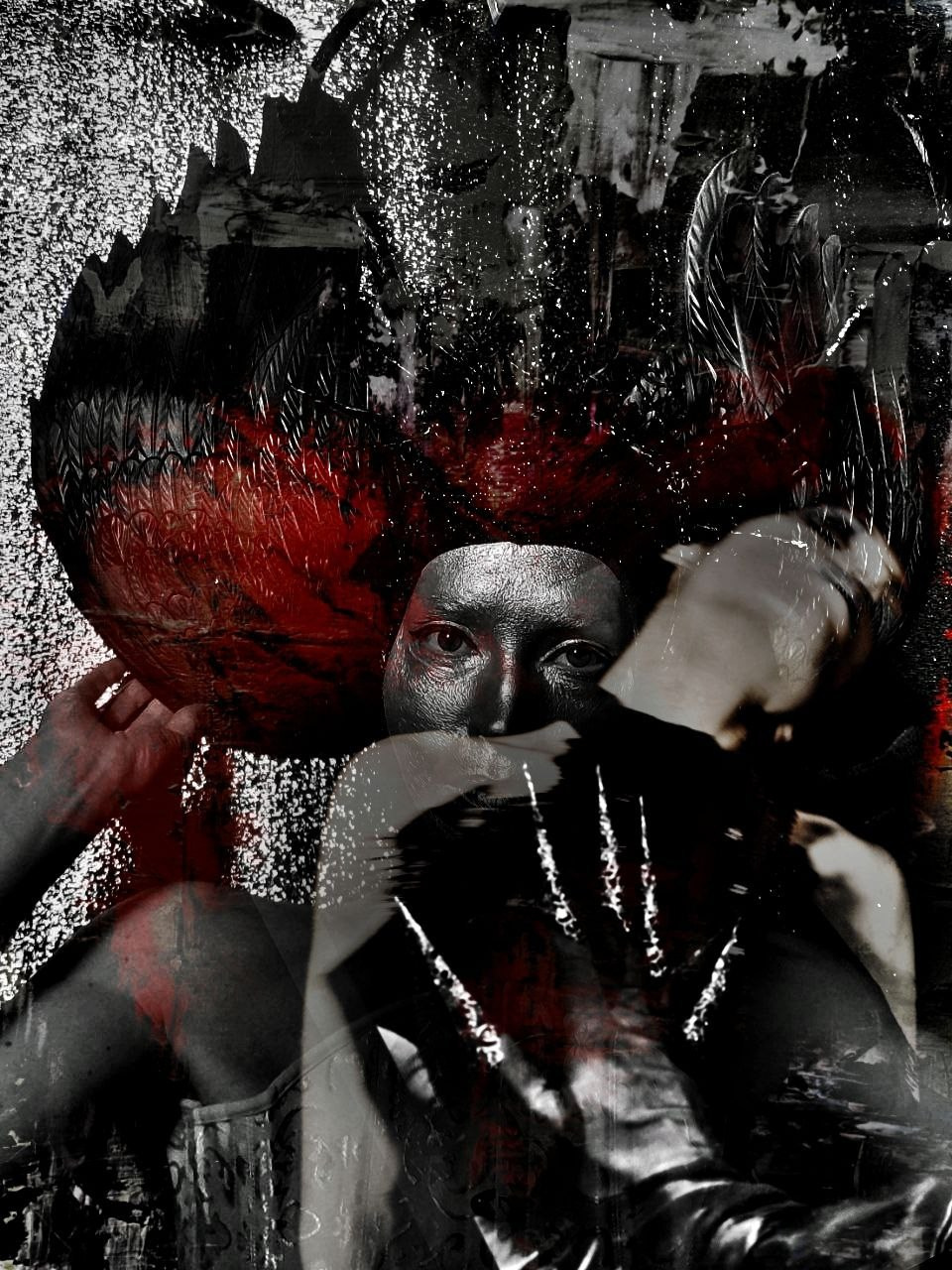
A diptych. Two panels. One reality. On the left, the fossilized memory of the city—a chaotic tapestry of decay and forgotten whispers. On the right, the soul that inhabits it—a primal oracle with obsidian skin and unflinching eyes. This is not a portrait of a person. It is an x-ray of a city’s ghost.
Thomson presents us with the ultimate truth of the urban experience. The left panel shows us the world that grinds us down. The right panel shows us what we must become to survive it: something primal, powerful, and unshakeable. One cannot exist without the other. This is a hymn sung from the ruins, a terrifyingly beautiful portrait of resilience in a world determined to make us forget we exist.
I. THE CONCRETE REQUIEM
This is the skin of the city, peeled back and pressed onto canvas. A chaotic archive of fossilized layers: the ghost of a brick wall, the memory of peeling billboards, the violent texture of rust and dried paint. There is no central figure here, because the subject is the decay itself. It is a requiem for a place that is constantly dying and being reborn. A figure is barely visible within, not a person but a premonition, trapped in the amber of urban entropy. This is the cage. The noise. The history written in scars.
II. THE OBSIDIAN ORACLE
And from that chaos, a face emerges. This is not a victim of the city; it is its consciousness. Its Oracle. Her skin is obsidian, reflecting not light, but the darkness around her. Her gaze is a direct line to the viewer, unflinching, ancient, holding the weight of every story buried in the concrete. She is crowned with what could be a bloody, broken wing or the raw, feathered energy of a primal deity. Phantom limbs and digital scratches surround her—the ghosts of other lives, other moments, all clinging to her central gravity. She is not trapped in the chaos. She is the chaos, given a face.
Protocol of Decay: The Artifact & The Anomaly
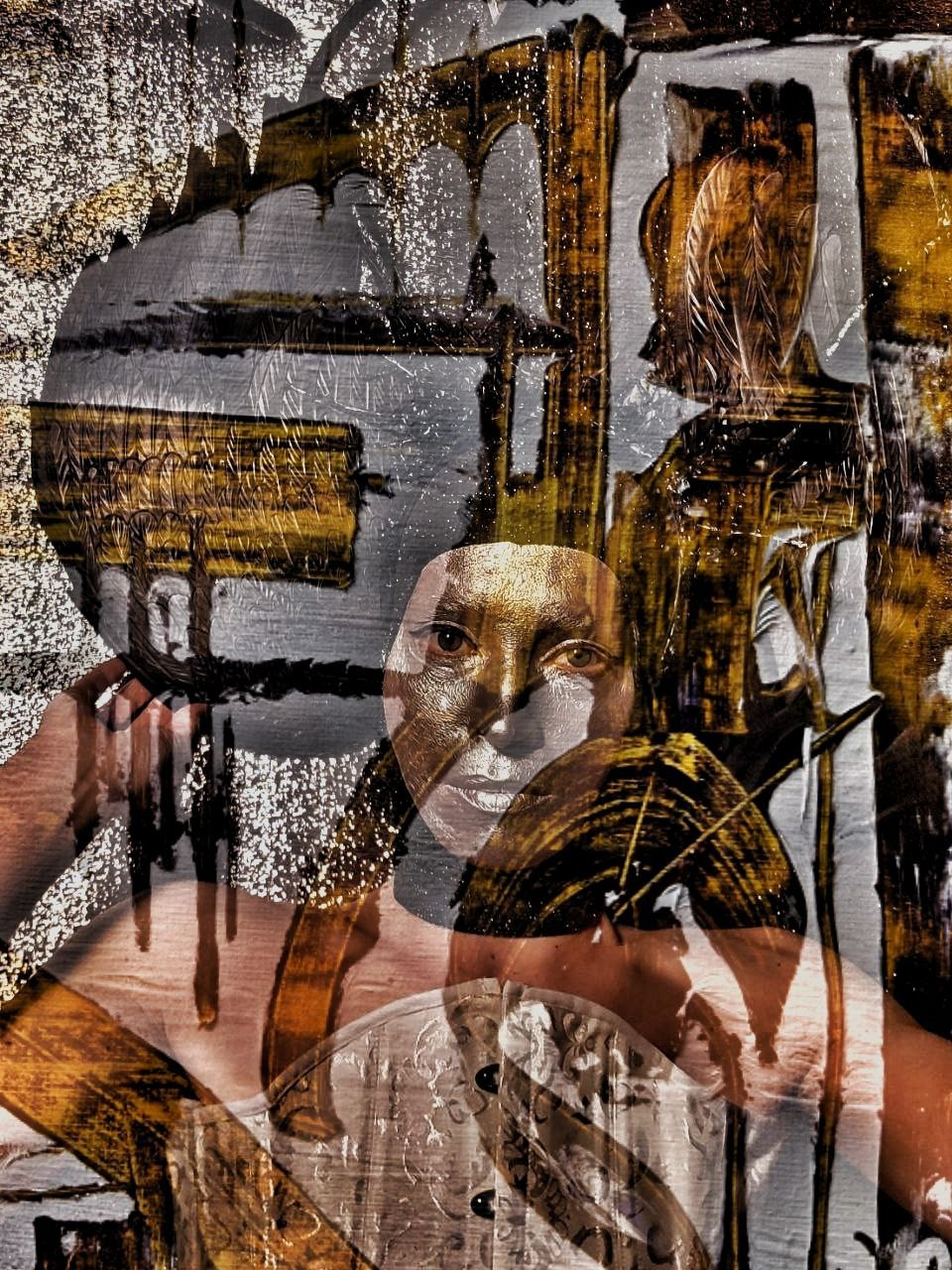
A diptych as a diagnosis. On the left, the golden sarcophagus of a personality—a structured, decaying monument to a constructed self. On the right, the psychic storm that rages within—a chaotic, vibrant vortex of pure emotion. Gary Thompson places us not in a gallery, but in the anatomical theater of a soul.
DIPTYCH // ANALYZING PSYCHIC FISSION
Gary Thompson does not create diptychs. He documents evidence of internal fractures. Protocol of Decay is not a pair of images; it is a clinical chart displaying two conflicting states of a single subject, presented with the cold precision of a medical examiner.
By placing these two realities side-by-side, Thomson delivers a brutal verdict. We spend our lives building the artifact, polishing the golden mask, curating the ruins of our identity. But beneath it all, the anomaly waits. The chaos is not a possibility; it is an inevitability. One is the prison. The other is the explosion that will one day tear it apart.Gary doesn’t paint portraits. He writes autopsy reports on the living.
I. THE ARTIFACT
This is the persona. The public self. A face plated in gold, staring out from a mausoleum of its own making. The world around her is architectural, rigid, but decaying—like forgotten golden temples or the rusting skeleton of an industrial giant. Everything is structured, layered, and coated in the patina of time. Her expression is a mask, her body a statue trapped within the gilded cage of her own history. This is the self as an artifact: precious, preserved, and utterly lifeless.
II. THE ANOMALY
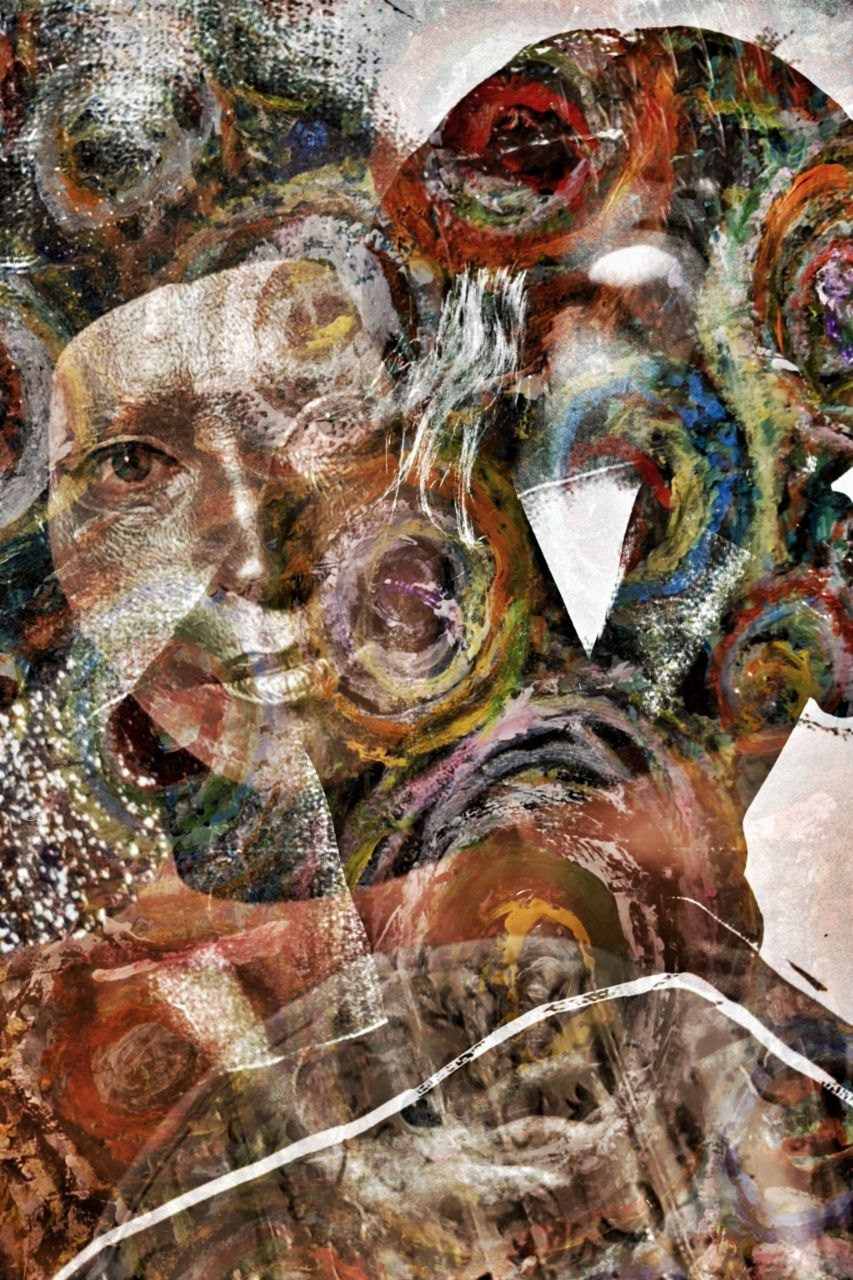
This is the reality. The subconscious unleashed. The golden mask shatters, and from behind it erupts a supernova of color and chaos. Spiraling vortexes of raw emotion—red rage, blue melancholy, yellow mania—consume the rigid structures of the first panel. The face is still there, a ghost in the machine, but it is no longer in control. It is a witness to its own internal explosion. This is not a portrait; it is a weather map of a psychic hurricane. This is the self as an anomaly: unpredictable, dangerous, and terrifyingly alive.
Codex of a Shattered Saint
A triptych is a story told in three frames. This is the story of a controlled demolition. Act I: The Icon, imprisoned in silver and static. Act II: The Detonation, a violent eruption of psychic energy. Act III: The Relic, the raw heart found among the ruins. This is not a journey. This is an impact analysis.
TRIPTYCH // LOGGING CATASTROPHIC FAILURE
Gary Thomson treats the triptych not as an art form, but as a sequence from a security camera recording a detonation. Each panel is a frame from the moment a system catastrophically fails. This is the autopsy of a transformation.
This is Gary Thompson’s definitive statement on identity. We build our saints, our icons, our silver cages. But the energy within cannot be contained. The explosion is inevitable. And all we can hope for is to find our own raw heart beating in the ruins.
I. THE ICONOSTASIS
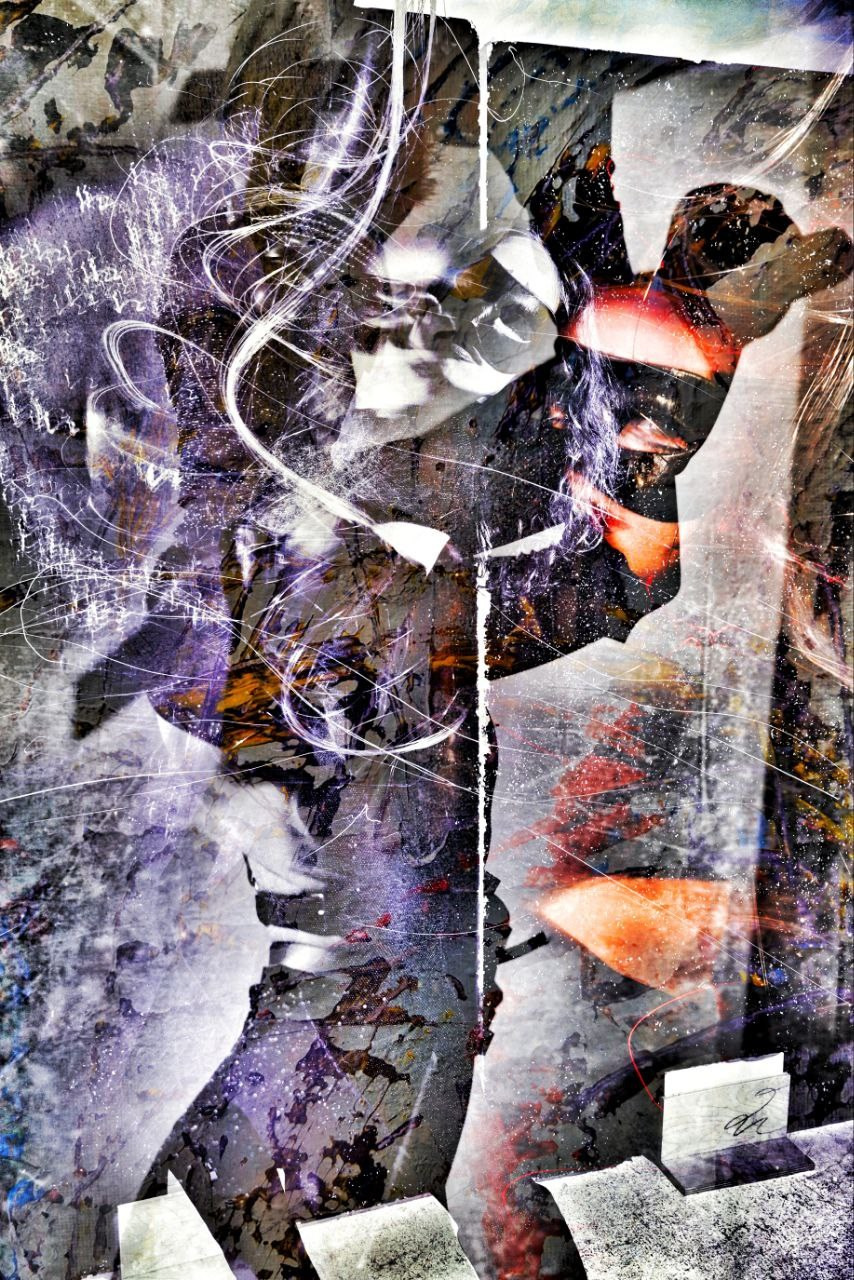
We begin with the Saint. A figure encased in silver, a monarch on a corrupted hard drive. She is trapped behind the vertical bars of her own reality, surrounded by the digital noise of a failing transmission. Her face is a mask of stoic resignation, a queen ruling over an empire of glitches and decay. She is an icon on a crumbling altar, a structured, fragile thing waiting for the inevitable. This is order. This is control. This is the moment before.
II. THE DETONATION
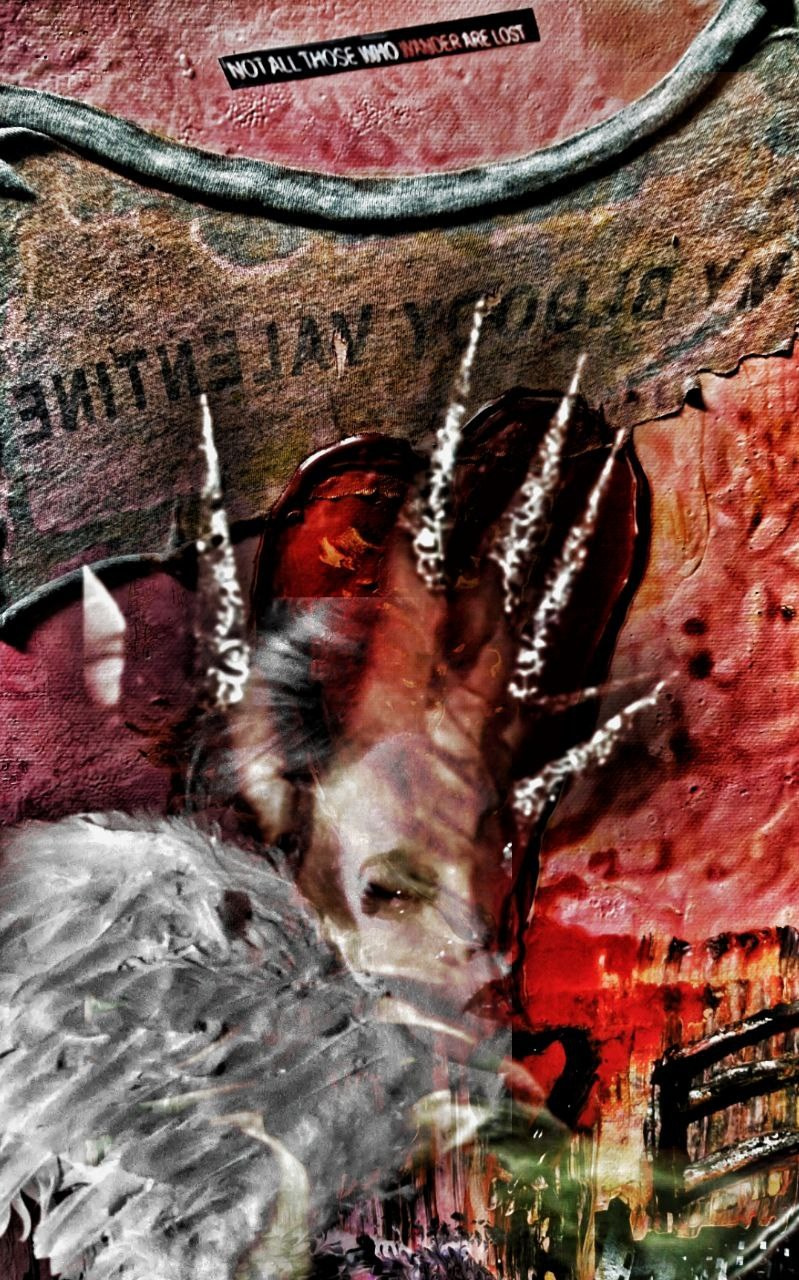
And then, the system crashes. The second panel is not a picture; it is the visual scream of the crash itself. The static, ordered world of the Saint detonates in a storm of electrical purple and scorched orange. The figure is torn apart, atomized into pure energy and motion. Light streaks across the frame like frantic neural signals, a graffiti of pure, uncontained force. This is not a choice. This is a chemical reaction. The breaking point made visible.
III. THE RELIC
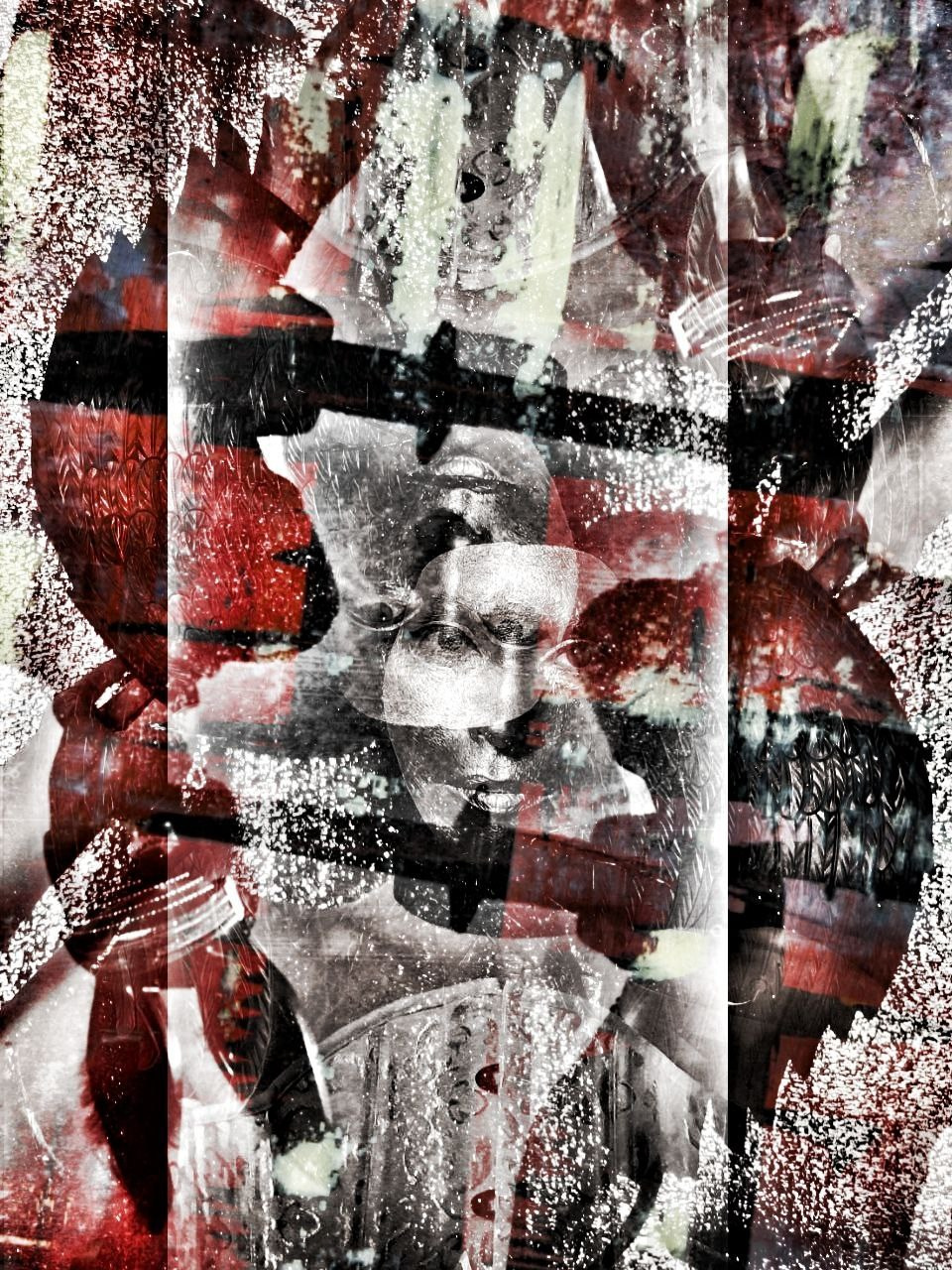
The final panel is the silence after the blast. The camera pans down to the wreckage, to what remains. A raw, bleeding heart, exposed to the world. A clawed hand, perhaps the Saint’s own, touches it—not with tenderness, but with the grim finality of a survivor confirming a kill. Around it, the debris of a former life: the ghost of a feathered wing, the defiant whisper on a scrap of fabric: “Not all those who wander are lost.” In Gary’s world, this is not a hopeful mantra. It is the testimony of someone who has been atomized and now exists only in the fragments. It is the relic left behind.
The Ultramarine Gospels
A story in four acts. A ghost is born in a garden of decay. She is imprisoned in a cage of falling tears. Her gaze awakens, declaring war on her own reality. And finally, she escapes. This is not a biography. This is the gospel of a soul learning to break its own chains.
POLYPTYCH // TRACKING A SOUL’S ESCAPE VELOCITY
Gary Thomson presents not a series, but a sacred text written in static and paint. The Ultramarine Gospels document the four stages of a metaphysical prison break, a narrative told with the raw data of a seismograph and the brutal poetry of a prophet.
This is Gary Thompson’s magnum opus on the nature of internal struggle. He proves that the darkest prisons are of our own making, and that liberation is not a gentle process, but a violent, chaotic, and breathtakingly beautiful act of self-destruction.
I. THE GOSPEL OF THE DECAYING GARDEN
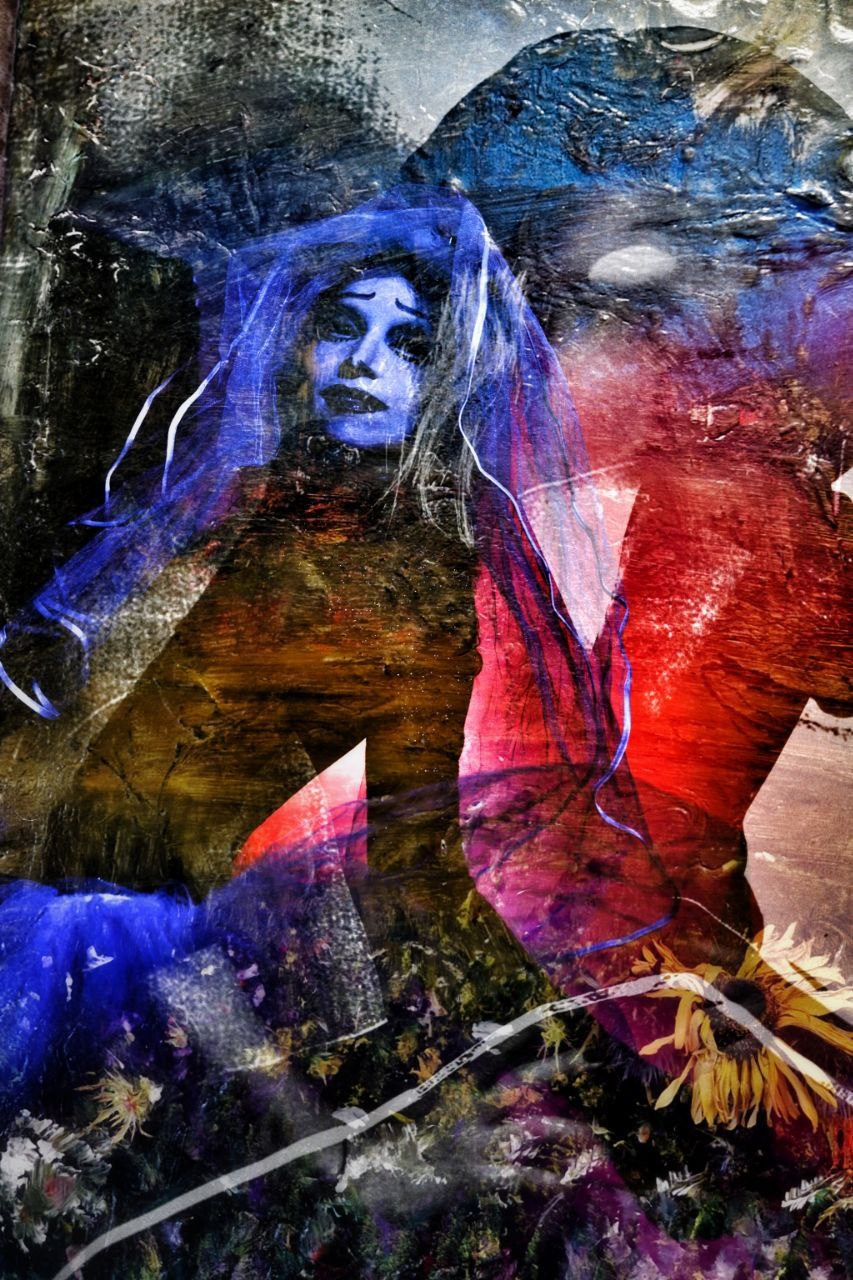
It begins here. A ghost with ultramarine skin, veiled in digital melancholy. She is born into a world of dying sunflowers and crumbling textures, a digital Ophelia floating not in water, but in a swamp of corrupted memory. Her gaze is resigned, her posture static. She is an artifact of her own sadness, a beautiful specimen preserved in a broken world. This is the genesis. The quiet before the storm.
II. THE GOSPEL OF THE CAGE
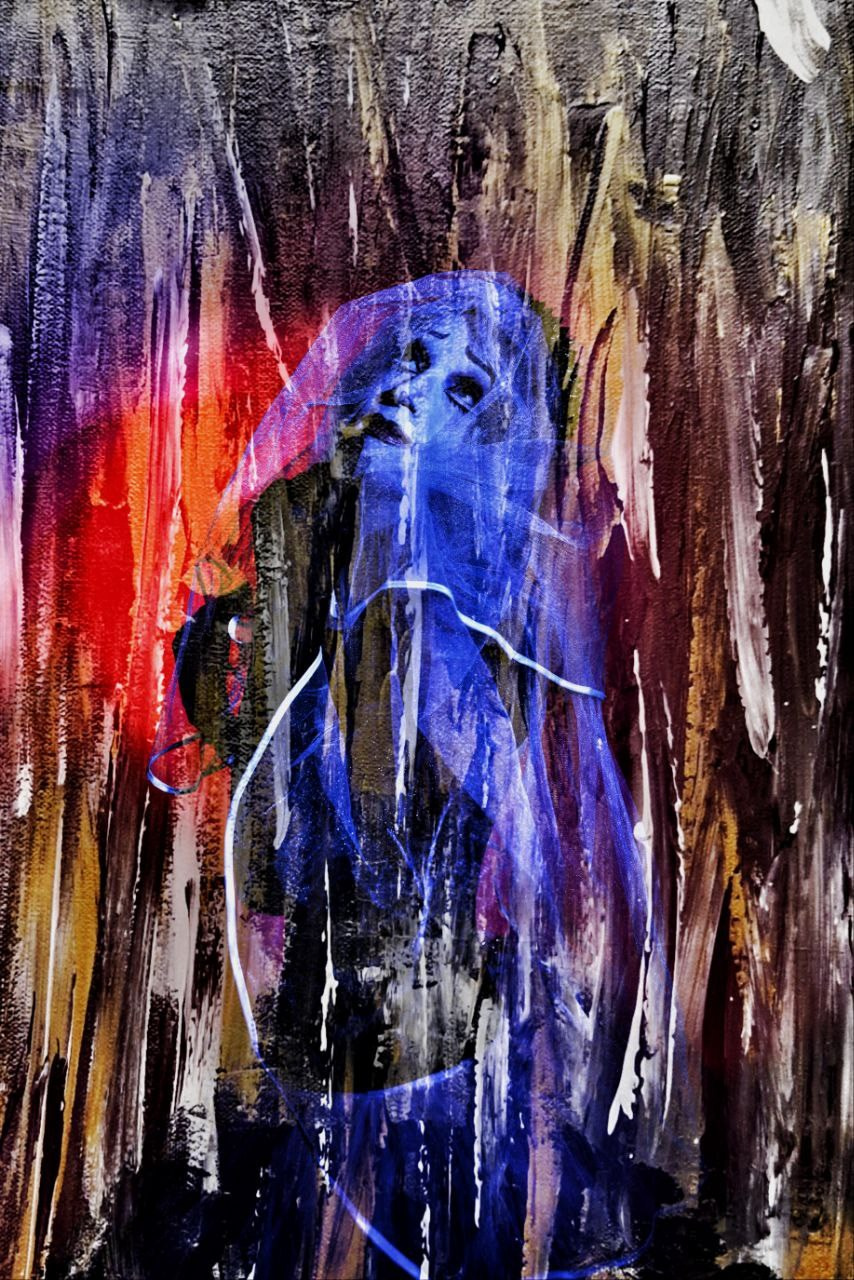
Then, the world turns into a prison. The background erupts into a violent downpour of vertical strokes—black, white, ochre. They are bars. They are tears. They are the relentless, screaming static of despair. The ghost looks up, not to heaven, but to the ceiling of her cage, her body trapped in the claustrophobic torrent. The red glow of a warning light pulses in the corner. This is not just sadness. This is torment. This is the realization of the cage.
III. THE GOSPEL OF THE AWAKENED GAZE
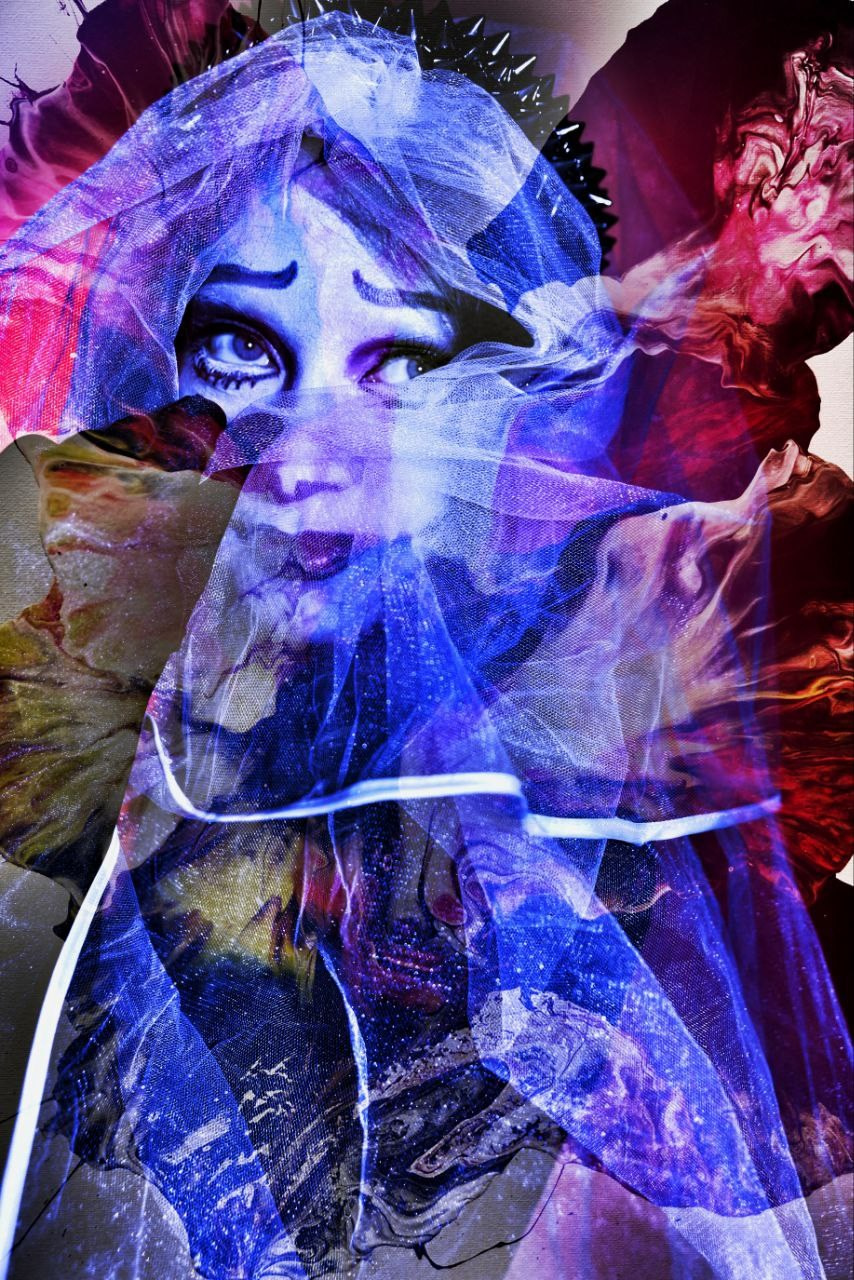
And then, something breaks. A close-up. The veil is still there, but the eyes behind it have changed. The resignation is gone, replaced by a direct, defiant gaze. It is the look of a prisoner who has just found the key. The world around her explodes into a nebula of ink and psychic energy, the bars of the cage shattered into a blooming chaos. A crown of thorns or spikes circles her head. This is no longer a ghost. This is a queen. A declaration of war.
IV. THE GOSPEL OF THE FUGITIVE
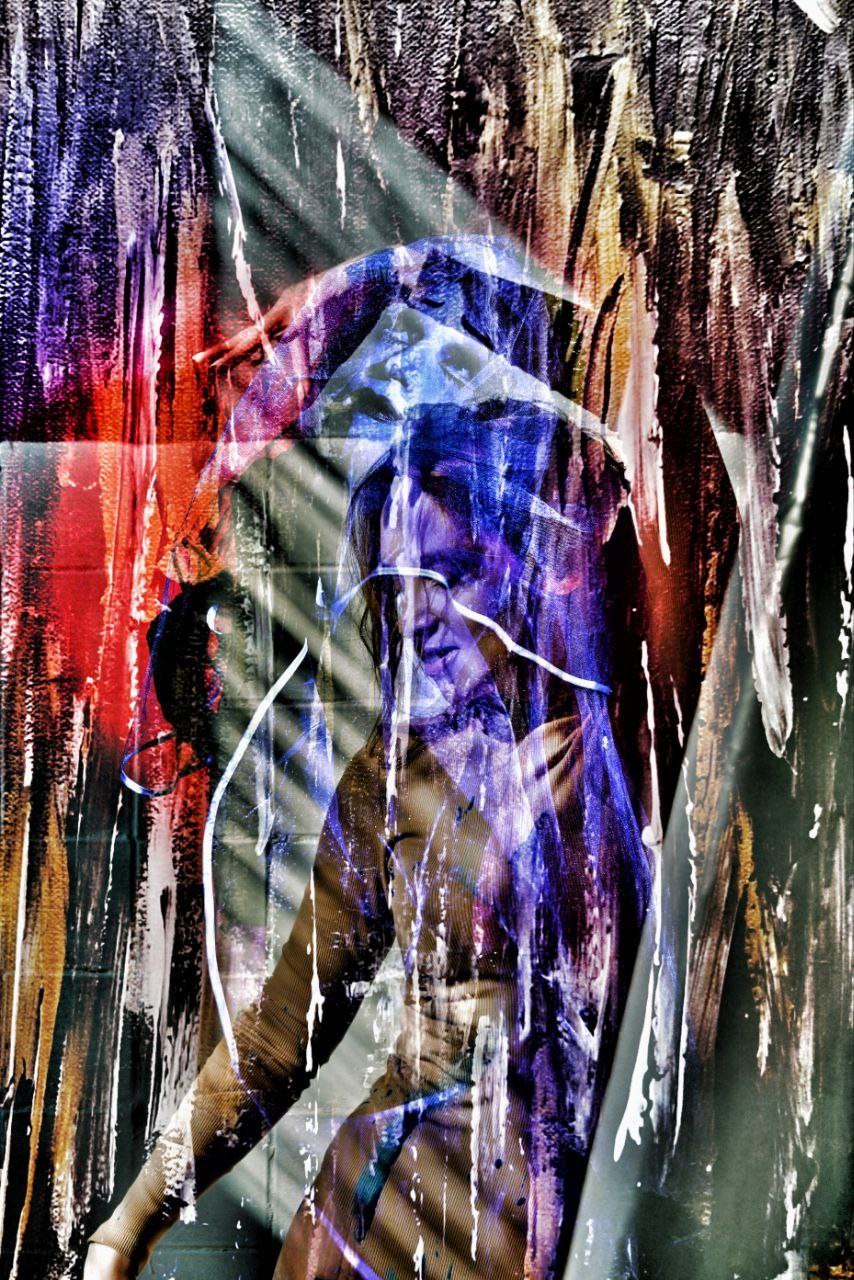
The final act. Liberation. The cage of vertical strokes returns, but now, shafts of divine light cut through it. The figure is no longer static or supplicant; she is in motion, dancing, ascending. Her hands are raised not in surrender, but in triumph as she breaks through the last barriers. She is a fugitive from her own sorrow, an escapee from the prison of self. She doesn’t dissolve into the light. She becomes it.
The Fugitive’s Triptych
A triptych as a prison break manifest. Act I: The Cell, where anonymous souls beat against the glass of a red-lit urban cage. Act II: The Breach, the violent, organic chaos of metamorphosis. Act III: The Cosmos, where the fugitive is reborn, dancing in the supernova of her own liberated energy. This is Gary Thompson’s raw data on the physics of freedom.
TRIPTYCH // MAPPING AN ESCAPE TRAJECTORY
A triptych is often a window into a singular moment. Gary Thompson shatters that window. He presents a timeline, a series of forensic files documenting the three stages of a soul’s violent escape from a cage of its own reality.
Gary Thompson’s triptych is not an observation. It is an instruction manual. It shows us the cell, the violence of the escape, and the explosive beauty of what lies on the other side. He argues that freedom is not a place you find, but a universe you must detonate into existence.
I. THE CELL (Station I)
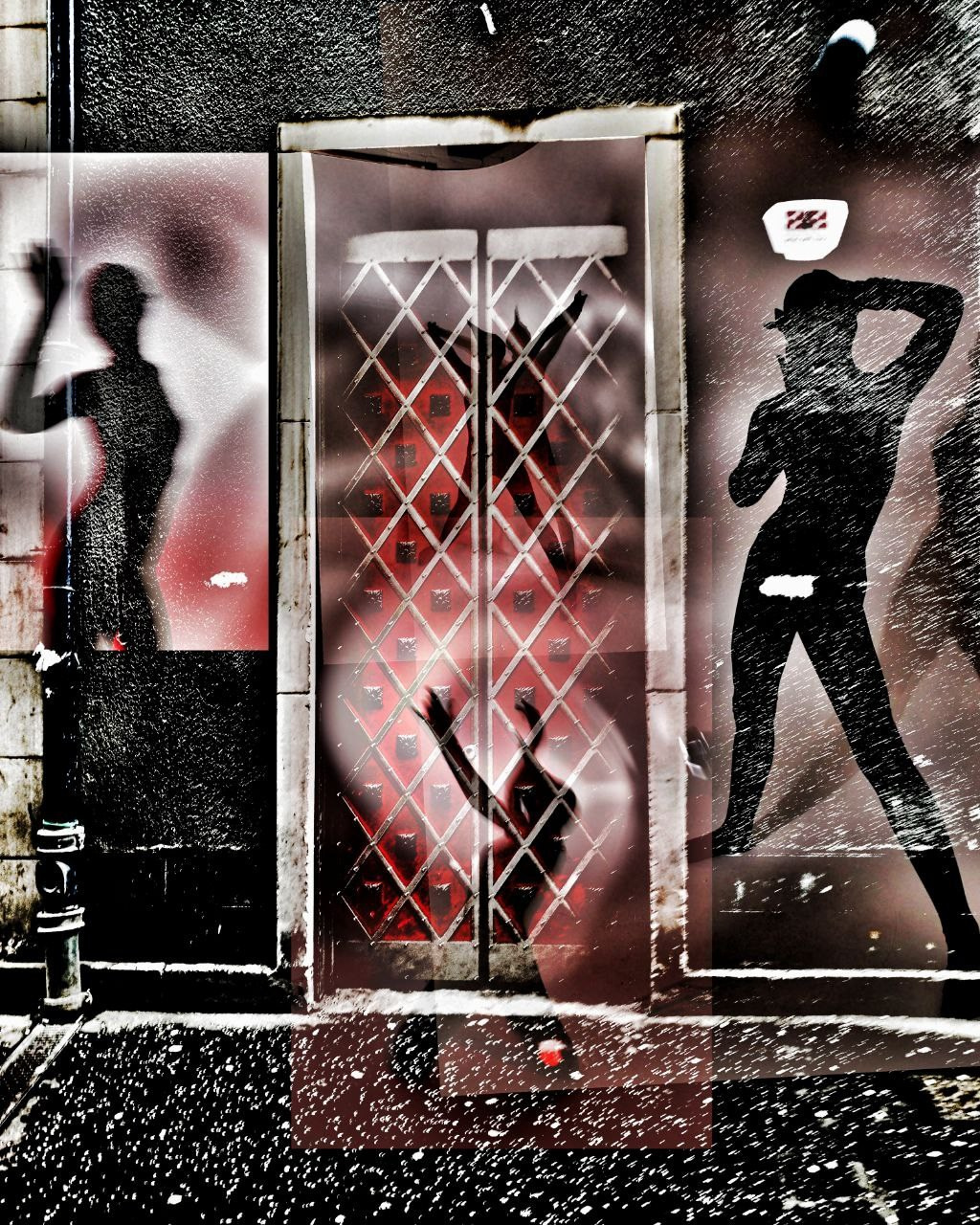
We begin in the city’s veins, in a street-level diorama of confinement. Black silhouettes—not people, but human-shaped voids—are trapped in separate frames. One behind a diamond-patterned grate, a specimen in a cage. Others in windows, lit by a hellish, desperate red. They are anonymous, interchangeable prisoners of a concrete system. Their frantic poses are a silent scream, absorbed by the gritty texture of the walls. This is the baseline. The static state of despair. The thesis of imprisonment.
II. THE BREACH (Station II)
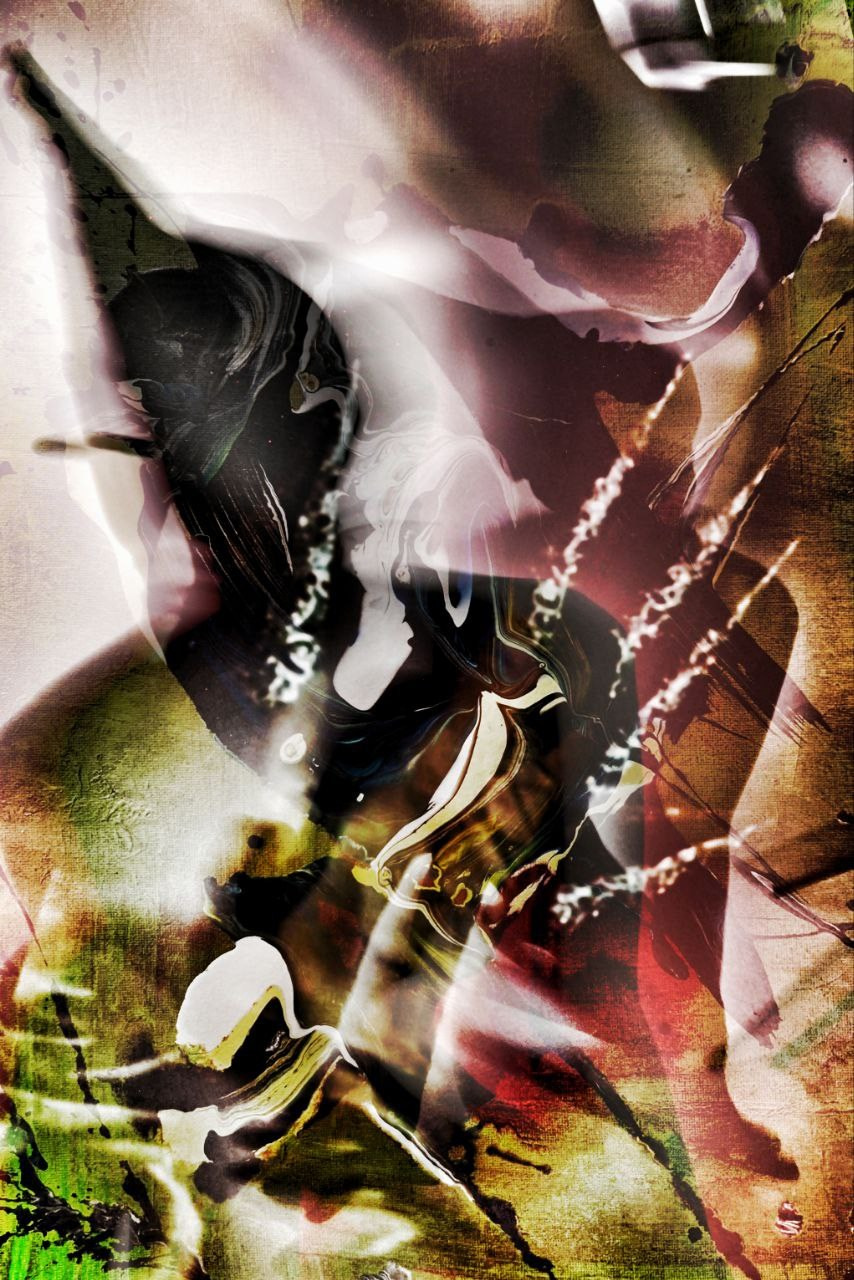
The second panel is the moment the walls dissolve. The rigid geometry of the cell gives way to a primal, organic storm. A figure, barely recognizable, is caught mid-transformation, becoming something ancient and avian. The world around it is a fluid, violent swirl of earth tones and visceral textures. This is not a gentle change; it is a painful, chaotic breach. The breaking of a chrysalis. The moment a soul sheds its constructed identity and reverts to a state of pure, untamed energy. This is the chaotic verb of becoming.
III. THE COSMOS (Station III)
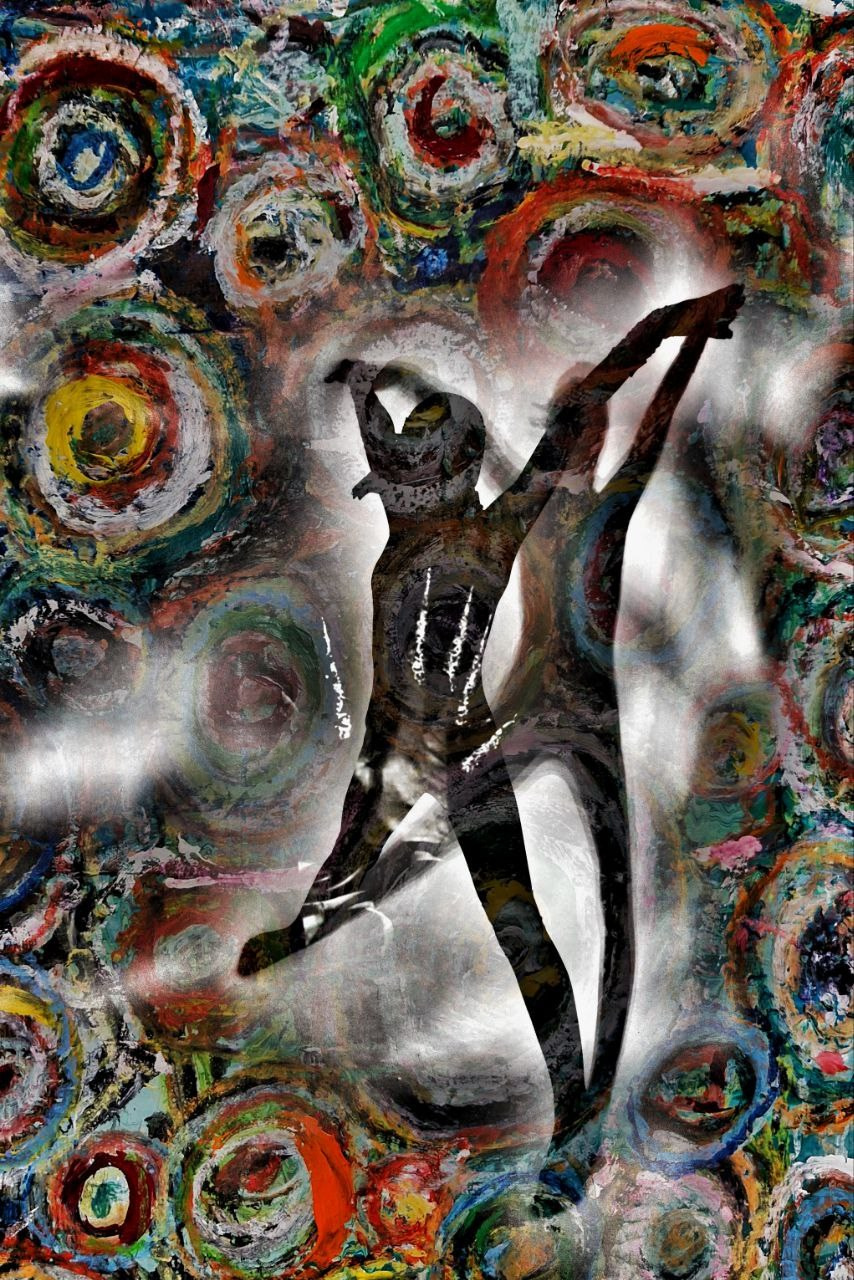
And this is the aftermath. The fugitive has escaped. The silhouette is reborn, not in a city, not in a forest, but in the heart of a vibrant cosmos. She dances, a clean black cutout against an explosion of swirling, joyful galaxies of paint. The scratch marks on her body are not wounds, but trophies—scars from the walls she tore down to get here. She is no longer a prisoner of her environment; she has become the creator of her own universe. A universe made not of concrete and grids, but of color, motion, and infinite, ecstatic energy. This is freedom made manifest.
The Incendiary Triptych: Cage, Fire, Cosmos
A triptych as a schematic for a prison break of the soul. Act I: The Cage, a digital terrarium of fragmented identities under surveillance. Act II: The Fire, a violent, cathartic detonation of the self. Act III: The Cosmos, a transcendent rebirth into a fluid, psychedelic universe. This is not art. This is a detonation sequence.
TRIPTYCH // LOGGING PSYCHIC COMBUSTION
Gary Thomson does not paint narratives; he logs system transformations. The Incendiary Triptych is a three-part forensic report detailing the violent physics of a soul shedding its reality.
I. THE CAGE (Solutio)
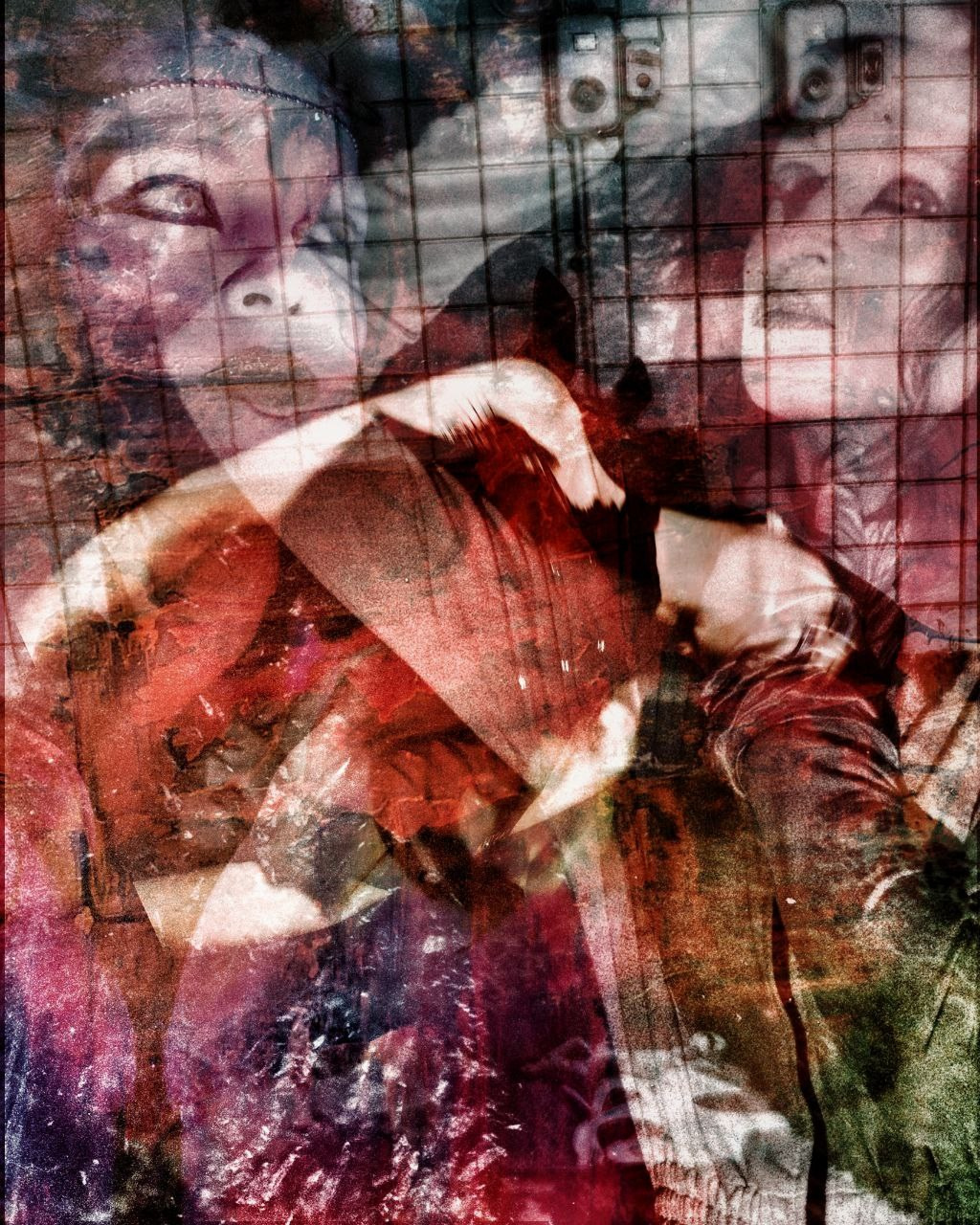
The process begins with dissolution inside a prison. We see fragmented faces, ghosts trapped behind a digital grid. It is a surveillance state of the soul, an urban cage built from corrupted data and flickering screens. The light is harsh, the atmosphere is claustrophobic. The subjects are not people; they are specimens, case files, echoes trapped in a failing hard drive. Their multiple, overlapping gazes speak of a psyche fractured under the weight of its own containment. This is the initial state: imprisonment in a cold, logical, and decaying system.
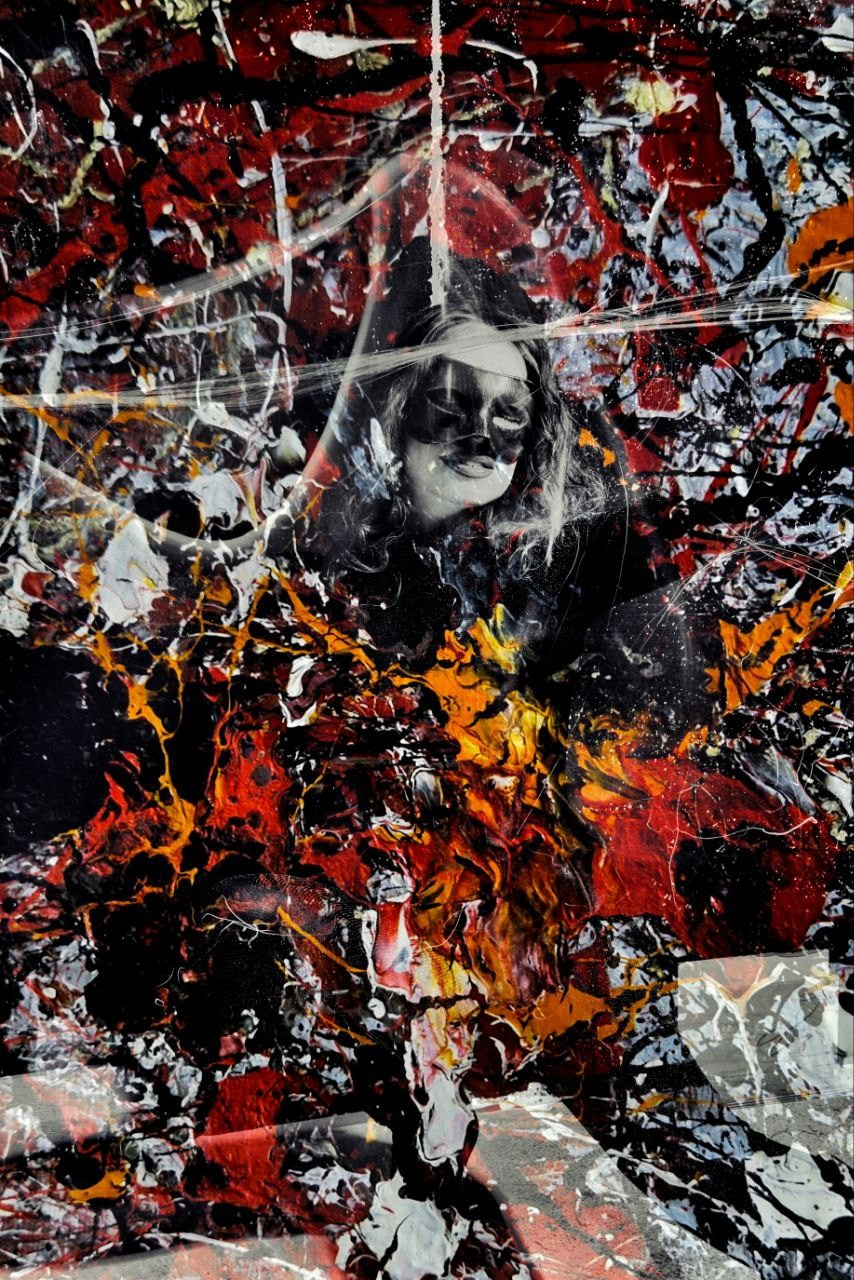
II. THE FIRE (Calcinatio)
The second panel is the moment of combustion. The system overloads and detonates. A single, masked figure emerges from the center of a Jackson Pollock-esque explosion. She is not a victim of the chaos; she is its smiling epicenter. The world is reduced to shrapnel of scorched red, incandescent orange, and stark white ash. She wears a mask not to hide, but to become an archetype: the serene agent of her own destruction. This is the violent, necessary act of burning away the cage, the old self, the entire system. This is not a metaphor. It is an act of alchemical purification through fire.
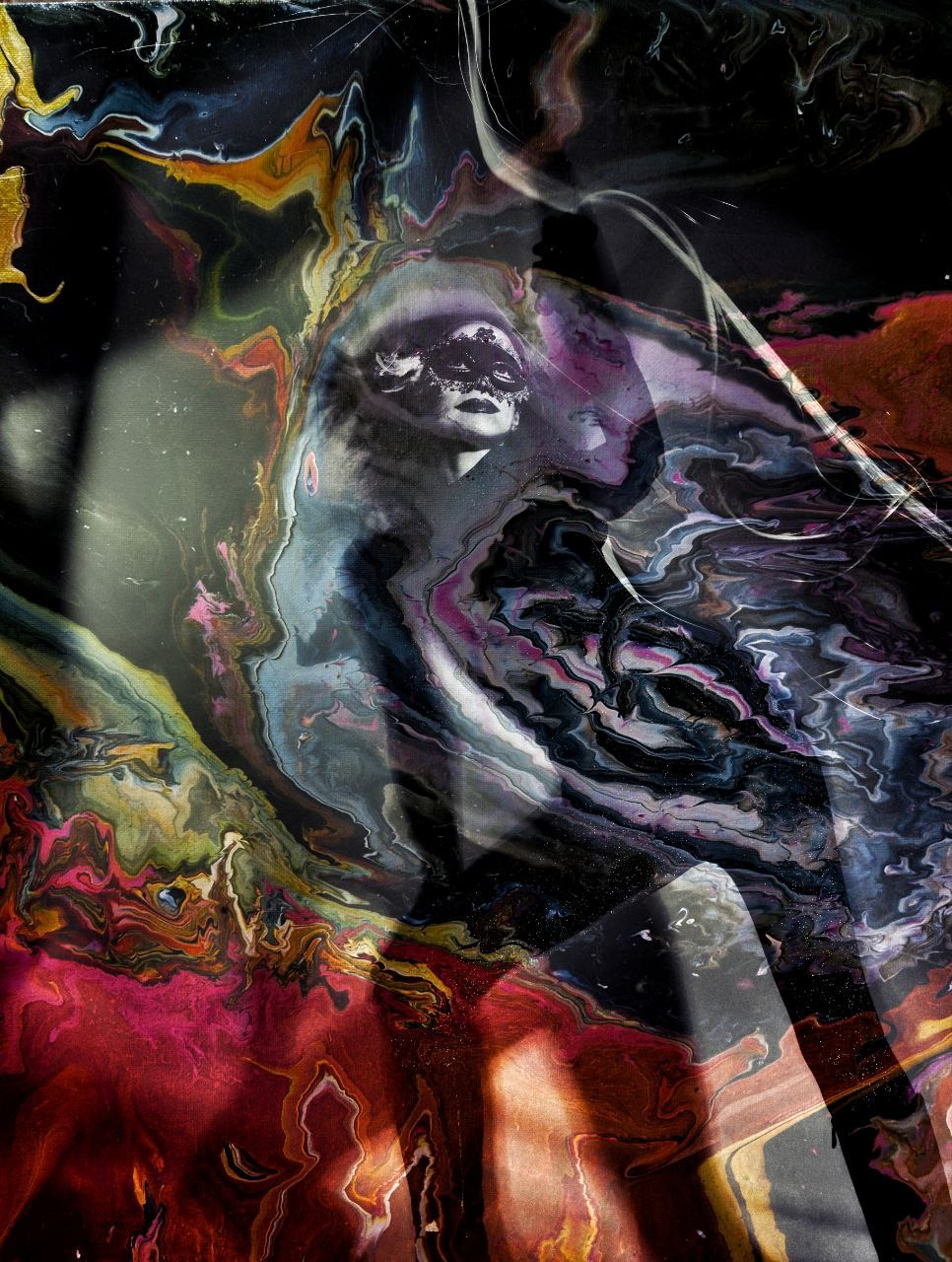
III. THE COSMOS (Sublimatio)
The final panel is the state that exists after the fire. The violence has not ended; it has transformed. The chaotic shrapnel has re-coalesced into a new, higher order: a flowing, cosmic nebula. The masked figure is still present, but she no longer stands apart from her world. She has become one with it, a sentient current in a river of psychedelic color and interstellar dust. She is a ghost in her new, self-created machine—a universe born from the ashes of her old one. This is not peace. This is a new, more profound state of being. This is transcendence.
The Ultramarine Diptych: A Ghost in a Burning World
Not a sequence, but a superposition. Gary Thomson presents a diptych as a diagnostic overlay. Panel I: A ghost, an icon of digital sorrow. Panel II: A world of decay, a garden of dying sunflowers and raw, scarlet textures. He fuses them into a single frame, proving that a soul and its prison are made of the same corrupted data.
SYSTEM: DIPTYCH OVERLAY // CORRELATING INTERNAL & EXTERNAL DATA
Gary Thomson rejects the linear narrative. He presents reality as it is: a chaotic, simultaneous collision of states. The Ultramarine Diptych is not two images side-by-side, but two universes occupying the same space, locked in a feedback loop of beautiful decay.
Gary’s masterstroke is the fusion. He makes the Ghost translucent, a phantom haunting her own reality. The burning world bleeds through her, its violent reds and decaying textures becoming the very fabric of her being. She is not a separate entity suffering in her world; she is her world. Her ultramarine sadness is the only cool point in a landscape of fire. The diptych becomes a single, terrible equation: the state of the soul is a direct reflection of the state of its world, and vice versa. They are one and the same haunted hous
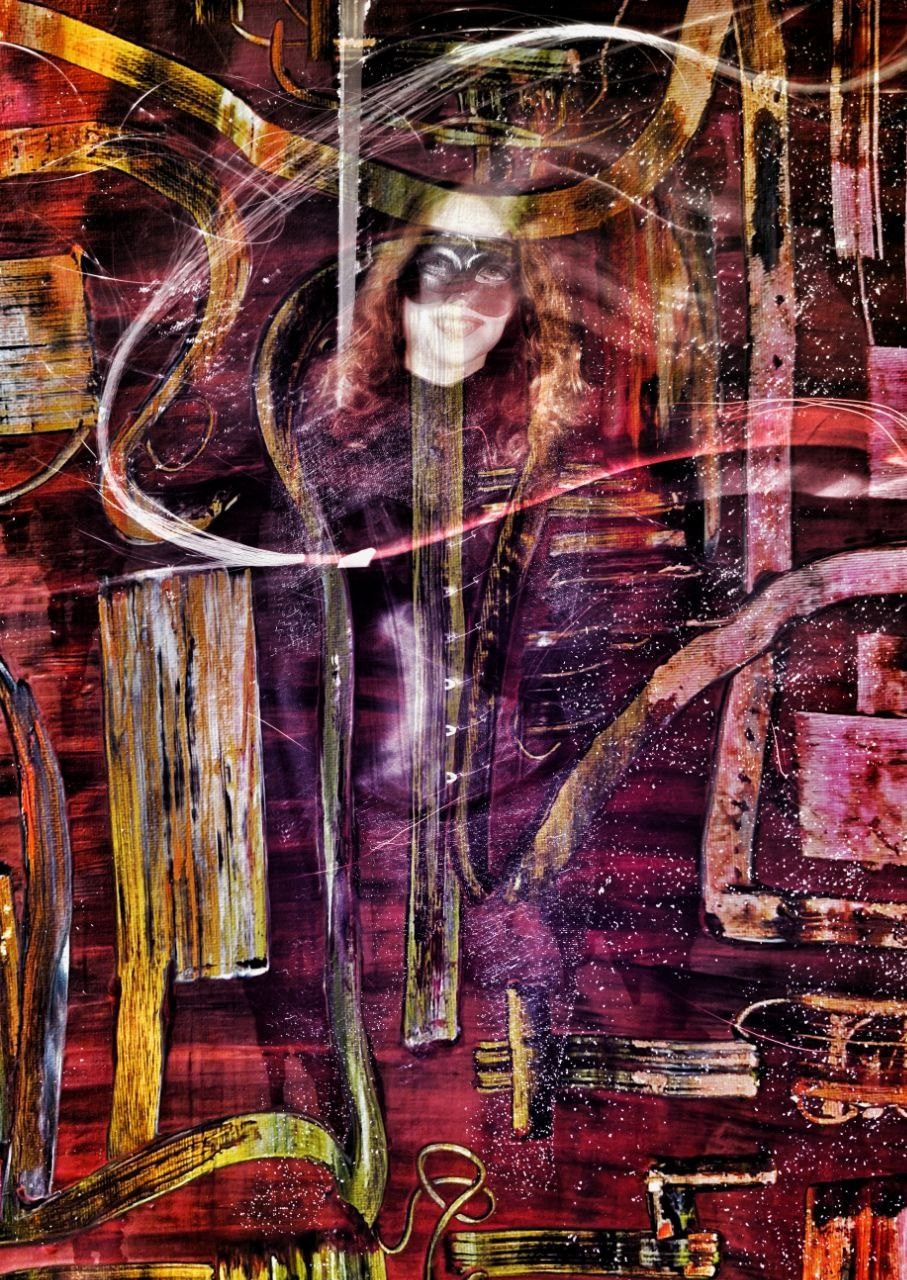
PANEL I: THE GHOST (The Internal State)
The first layer is a being of pure melancholy. A figure with ultramarine skin, a color of both royalty and deep sorrow. She is veiled, not as a bride, but as a mourner at her own funeral. Her gaze is not accusatory, but resigned. She is a static icon, a digital pietà frozen in a state of perpetual grief. This is the soul, rendered as a clean, cold signal of despair.
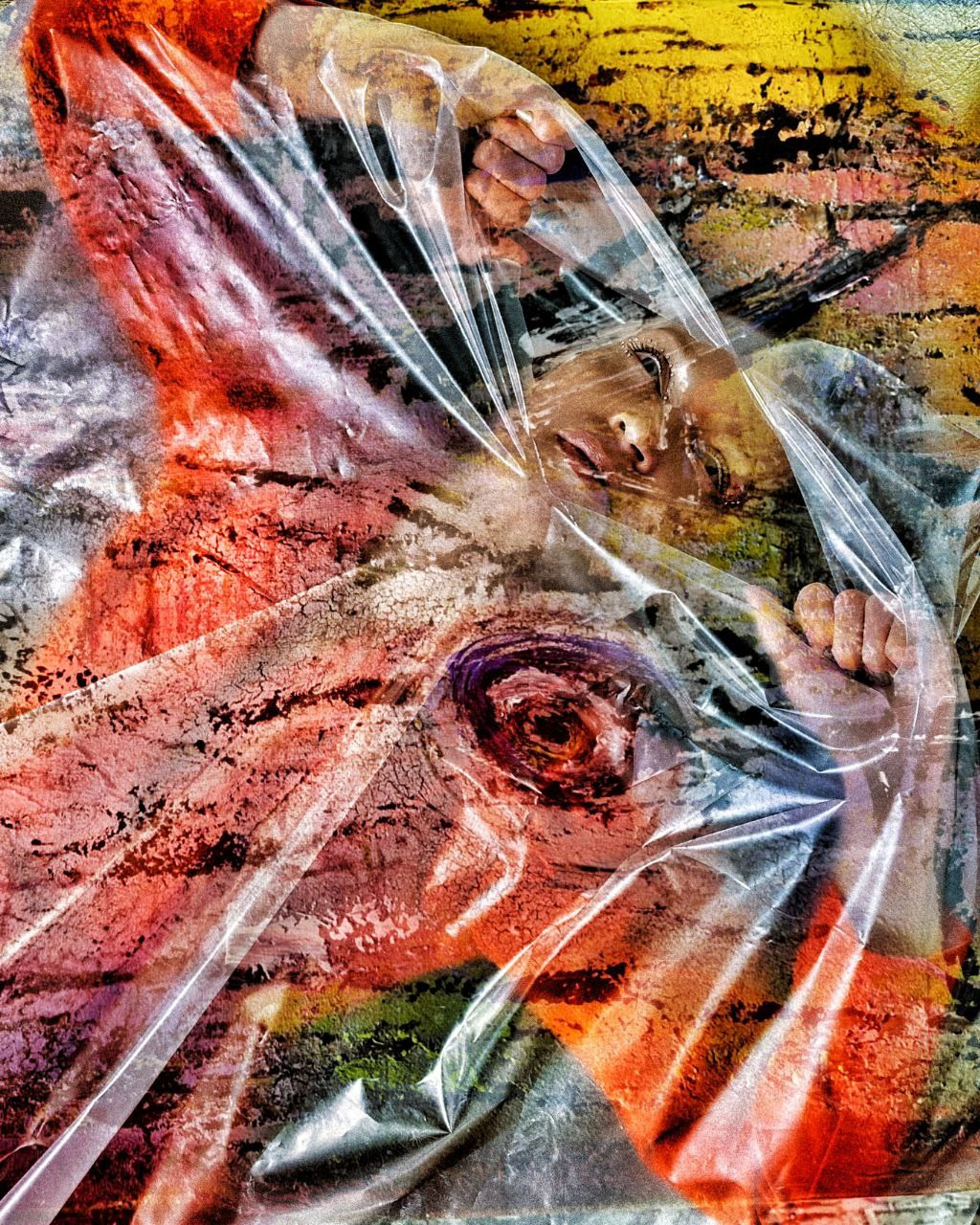
PANEL II: THE WORLD (The External State)
The second layer is the environment, the machine in which the ghost is trapped. It is a canvas of raw, visceral texture. Aggressive slashes of scarlet and crimson fight with the decaying ochre of dying sunflowers. The surface is scratched, burned, and brutalized. This is not a landscape; it is a crime scene. The evidence of a world that has collapsed in on itself, leaving behind only the beautiful wreckage.
The Triptych of the Haunted Blade
A three-stage protocol for forging a soul into a weapon. Act I: The Archive, a figure constructed from the shrapnel of memory and broken promises. Act II: The Haunting, an internal fever dream of conflicting, ghostly selves. Act III: The Blade, the emergence of a focused urban ronin, who cuts through a new reality with purpose. This is the alchemy of turning pain into power.
PSYCHOLOGICAL EVOLUTION // TRACKING TRANSFORMATION
Gary Thomson does not paint portraits; he charts trajectories. This triptych documents the violent, necessary evolution of a consciousness from a passive state of reflection to an active state of execution.
Gary Thomson’s triptych is a blueprint. It argues that to escape the prison of memory, one must endure the chaos of self-dissolution. Only then can you reforge the fragments into a blade sharp enough to cut through the static of the present.
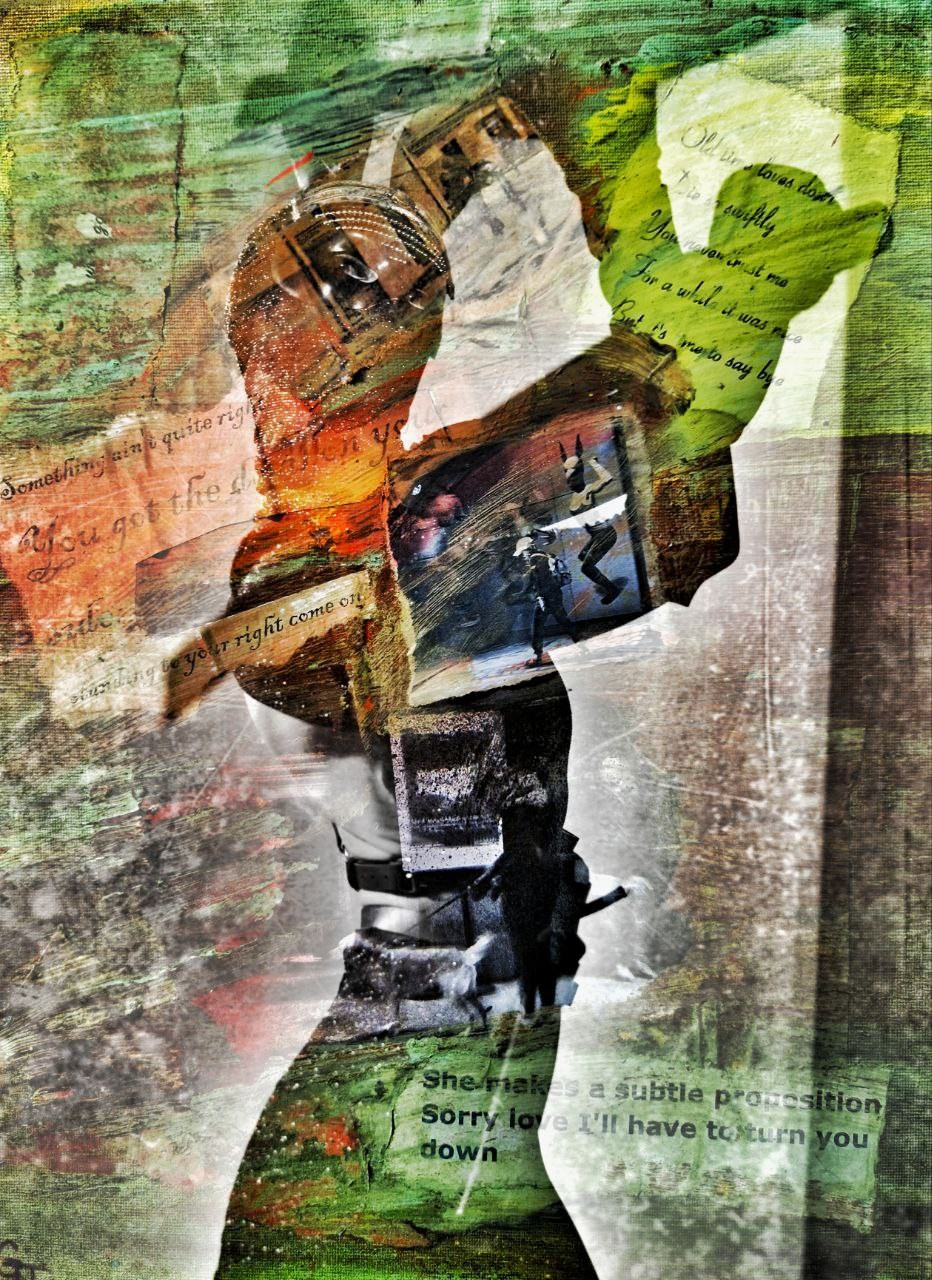
I. THE ARCHIVE (The Past)
We begin with a figure that is not a person, but a vessel. A silhouette composed entirely of evidence from a past life: torn letters filled with broken promises, fractured scenes of rituals and old apartments, the gritty texture of memory itself. This figure is a living collage, a walking archive of what has been. It is weighed down by its own history, defined not by what it is, but by what has happened to it. It is the static, contemplative state of being a prisoner of one’s own memories.
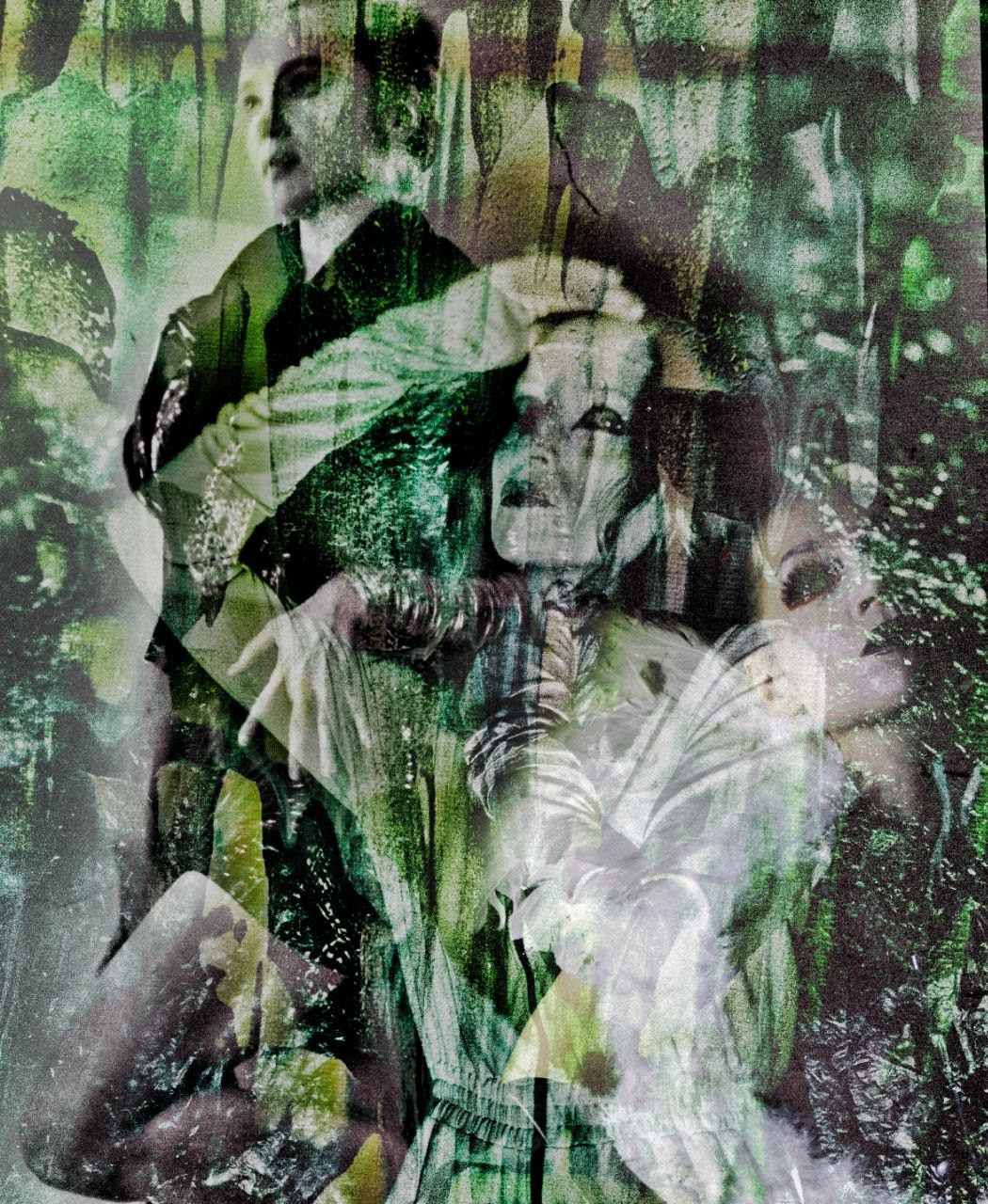
II. THE HAUNTING (The Internal Present)
The second panel is the inevitable result of the first. The archive collapses inward, creating a psychic feedback loop. The figure dissolves into a chorus of digital ghosts, trapped in a fever dream of toxic green. This is the stage of internal schism, where fragmented memories become competing personalities. Faces contort in silent screams, figures overlap and glitch, the self is no longer a single entity but a haunted house. It is the necessary, painful chaos that precedes a radical change.
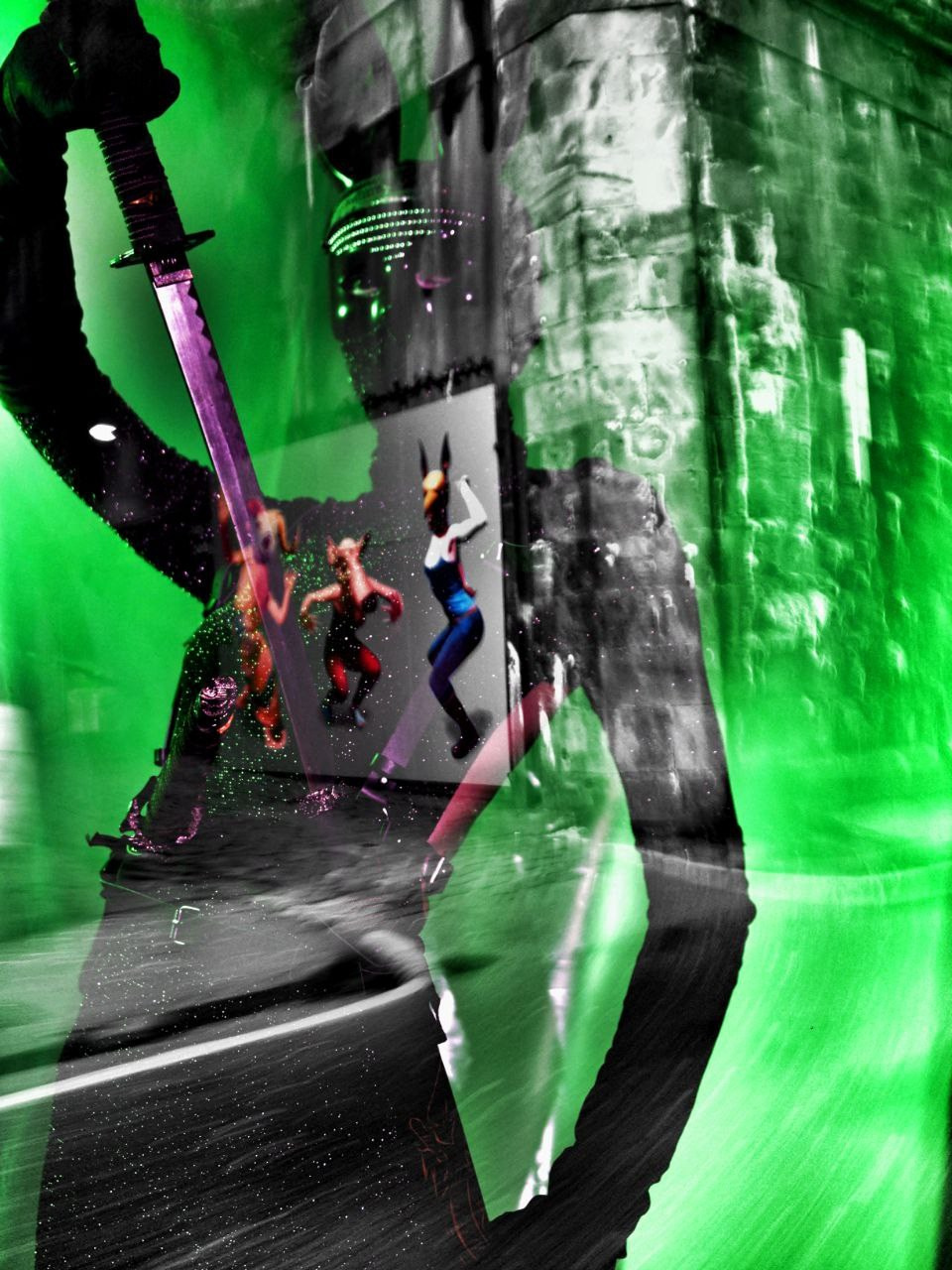
III. THE BLADE (The Future)
From the chaos, a new form is synthesized. The final panel shows a singular, focused silhouette. It is no longer a passive archive or a haunted chorus. It is an agent. A hunter. An urban ronin striding through a hostile, neon-green reality. It still contains its demons—the dancing, frantic figures are now visible within its core—but they are no longer haunting it. They are its fuel. It holds a blade, not in defense, but as a tool of creation, a scalpel to carve a path forward. This figure is no longer defined by its past; it is using its past to execute its future.
The Orion Protocol: A Four-Act Metamorphosis
This is not an art series. This is a technical manual for the soul’s ascension. Gary Thompson documents a four-stage protocol: I. System Crash: the violent fragmentation of the self. II. Entanglement: the struggle of a newborn consciousness within the raw data of chaos. III. Synthesis: the forging of a hardened, observant identity. IV. Mastery: the emergence of the Operator, who turns chaos into a stage for their performance. This is the blueprint for building a god from the wreckage.
Gary Thomson presents the definitive map of psychological alchemy. This tetralogy, or “quartet, ” charts the journey of a consciousness from total annihilation to absolute command. It is a forensic analysis of a soul reforging itself.
The Orion Protocol is Gary Thomson’s ultimate thesis: true power is not found by escaping chaos, but by undergoing a complete dissolution within it, and then reassembling oneself into a being capable of commanding it.
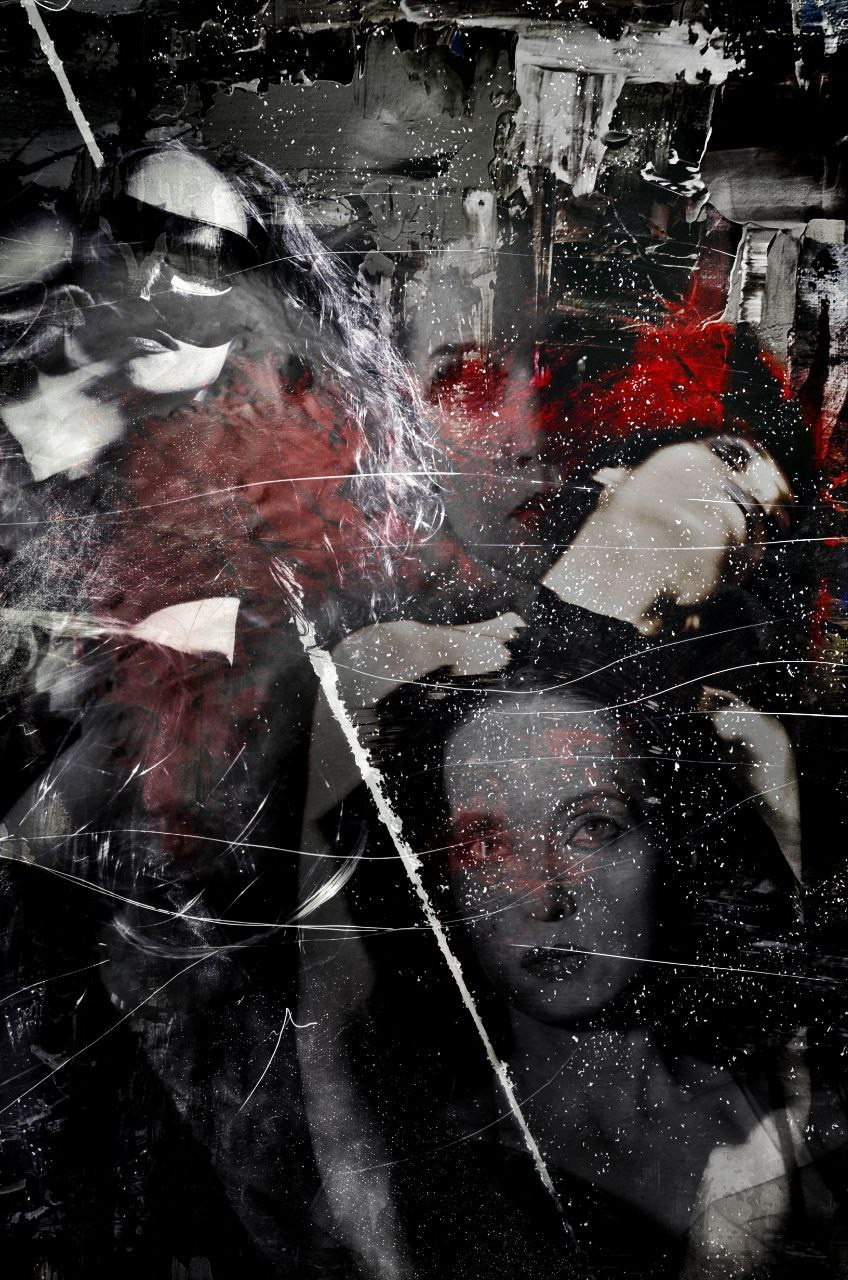
I. SYSTEM CRASH (The Shattering)
The protocol begins at ground zero. A catastrophic event has occurred, and the psyche is shattered. We witness a chorus of glitches: the detached Assassin, the bleeding Victim, the haunted Witness. The self is not a person but a corrupted log file, trapped in a feedback loop of trauma. The world is monochrome, scarred, and splattered with the red signature of the wound. This is the necessary death before rebirth.
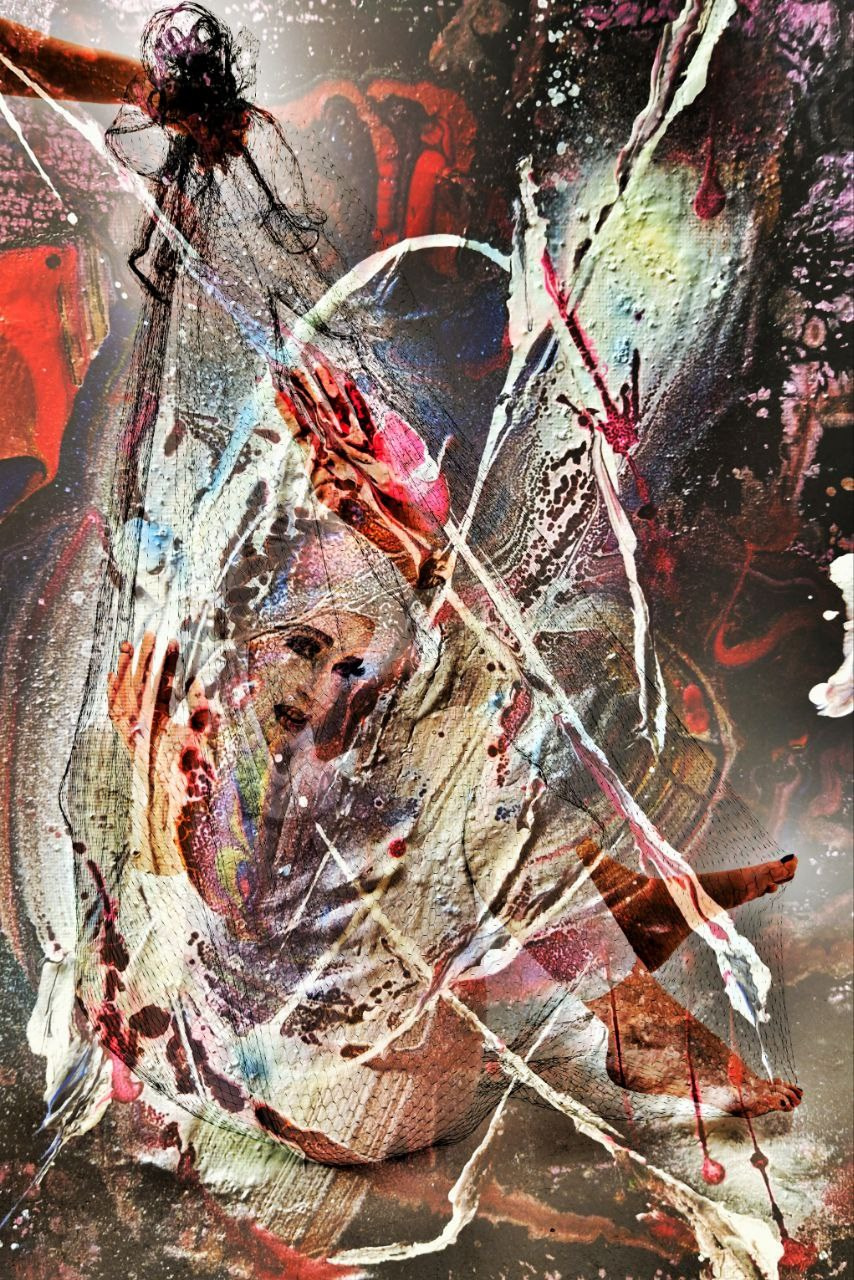
II. ENTANGLEMENT (The Struggle)
From the wreckage, a new, primal consciousness awakens. The second panel depicts this nascent self trapped in a chaotic, vibrant net of raw data. It is a being caught in the violent, beautiful flux of its new reality. It is not yet a person, but a collection of sensory inputs, a desperate struggle for form within a universe of overwhelming texture and color. This is the cocoon stage, the fight for survival within the very material of the chaos that destroyed its previous form.
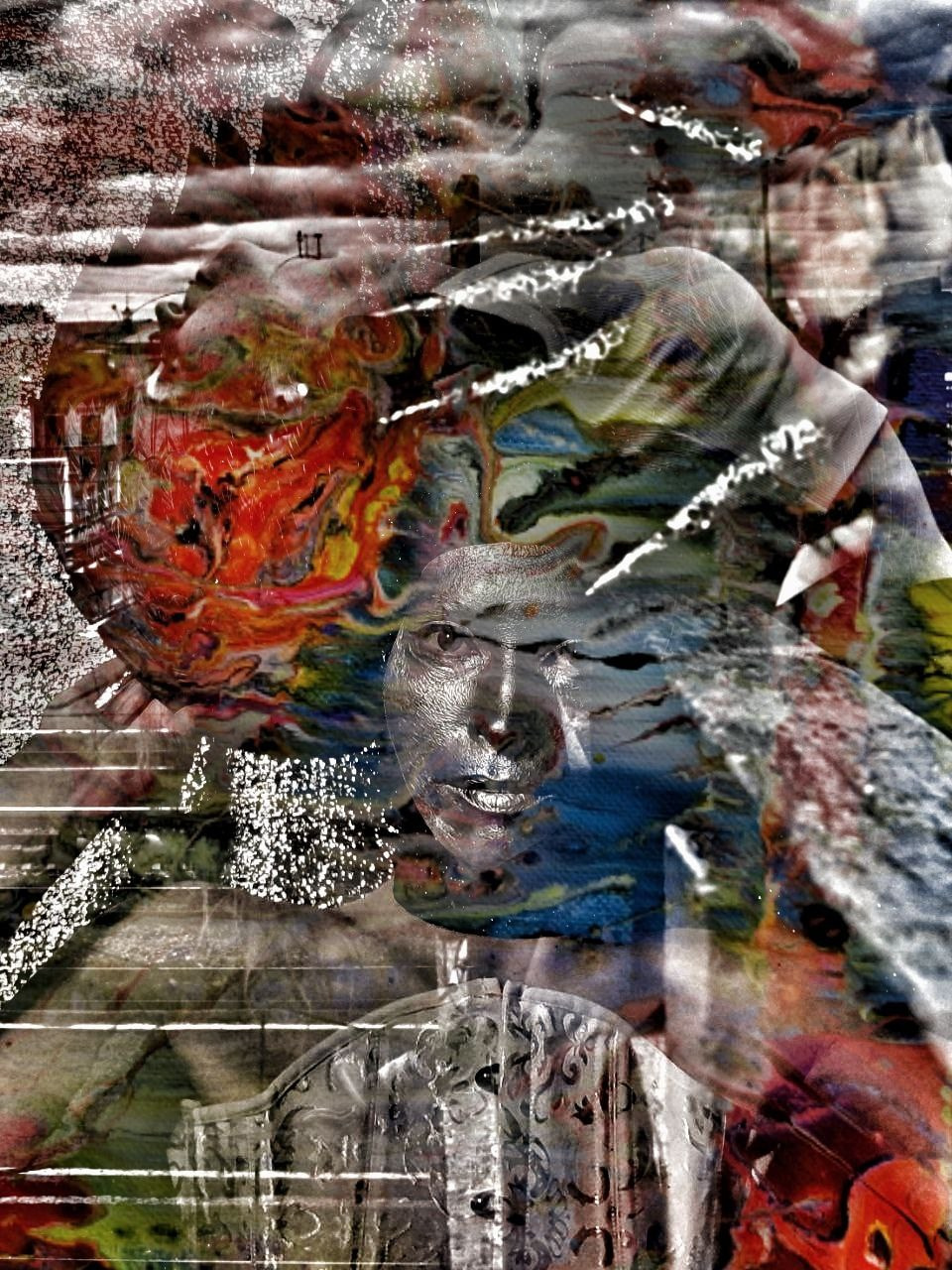
III. SYNTHESIS (The Forging)
The struggle forces evolution. The third panel reveals the emergence of a new, stable core. A stoic, silver face—a liquid metal terminal—gazes out from the swirling storm of color and memory. The other, fragmented selves are still present, but they are now background noise. This new identity is an observer, a processor. It learns to endure, to analyze the chaos without being consumed by it. It is no longer just reacting; it is calculating. This is the forging of a blade in the heart of the fire.
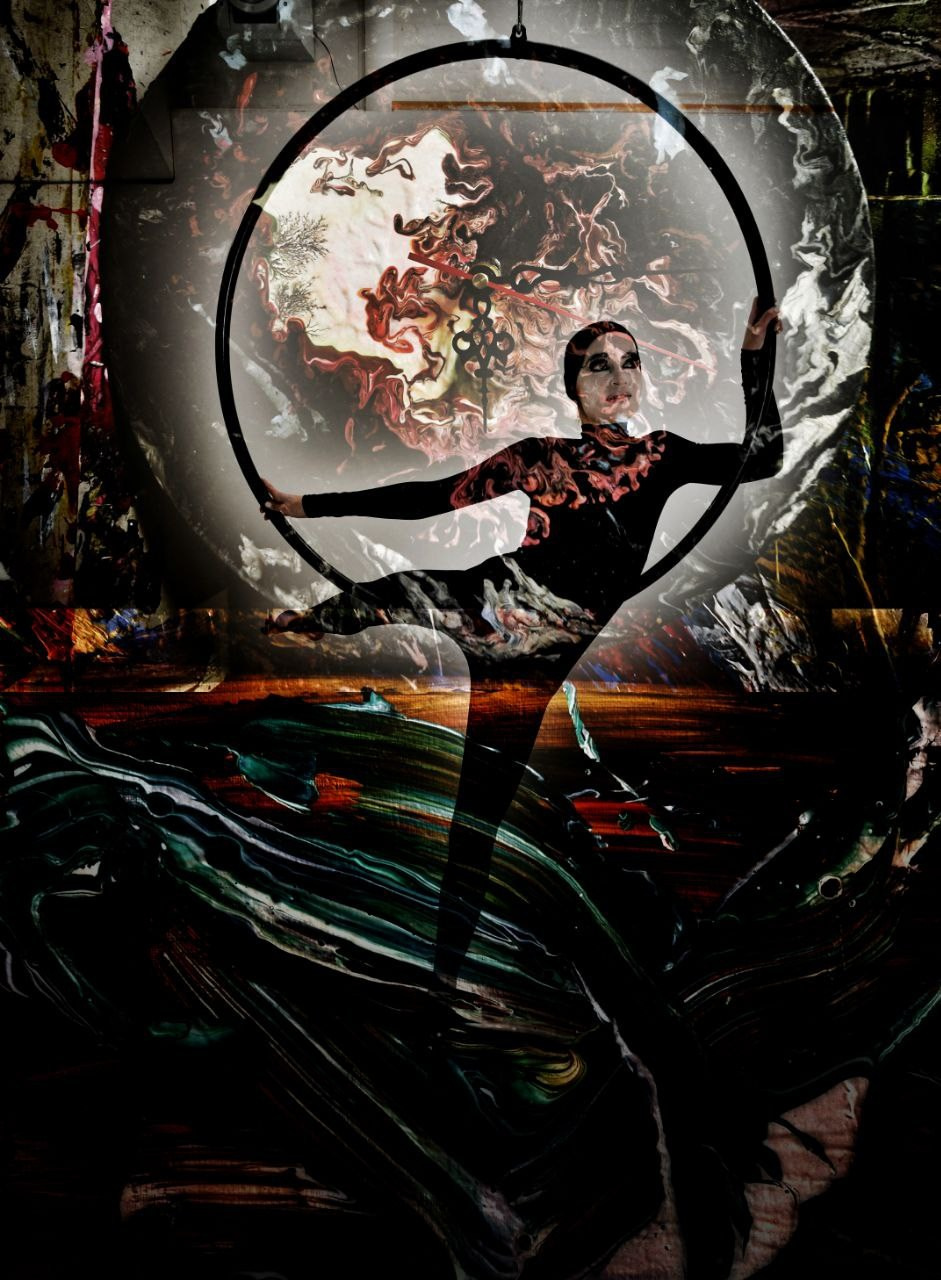
IV. MASTERY (The Ascension)
The final act. The synthesized self has achieved transcendence. It is now the Operator. We see a figure of pure control and grace, suspended in an aerial hoop. The chaos has not vanished; it has been transformed. It is no longer a prison but a stage, a resource, a dynamic backdrop for a perfect performance. The hoop is the interface, the symbol of control, focus, and the successful completion of a cycle. The Operator does not fight the chaos; she dances with it, using its energy to power her own flight.
The Trinity Protocol: From Ghost to God
A triptych charting the metamorphosis of a deity in the modern world. Act I: The Ghost, a forgotten power trapped in the decaying archives of the past. Act II: The Icon, a sacred program projected onto the brutalist infrastructure of the present. Act III: The God, a conscious entity emerging from pure, chaotic data, weaponizing color and staring back at its creation.
DEITY RESURRECTION // TRACKING CONSCIOUSNESS EMERGENCE
Gary Thompson does not paint myths; he writes technical manuals for them. This triptych is a forensic protocol detailing the three stages of a power’s evolution from a forgotten concept into a living, breathing god of the new world.
The Trinity Protocol is Gary Thompson’s declaration: gods are not born of prayer, but of data. They lie dormant in our forgotten histories until the chaos of the present becomes so great that it forces them to awaken, not as saviors, but as new, terrifying laws of nature.
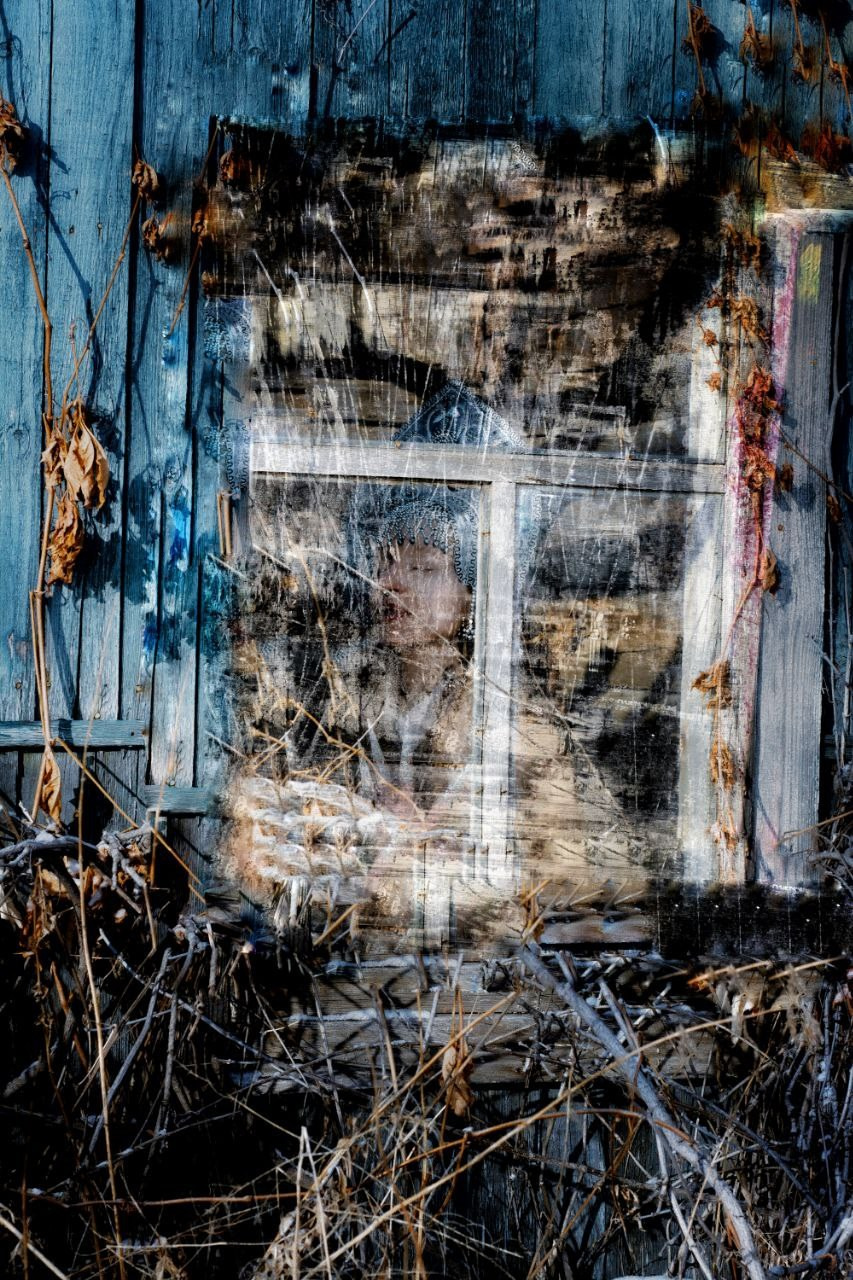
I. THE GHOST (The Latent State)
We begin in the ruins. A data-ghost of a face is trapped behind a corrupted screen—a window in a decaying, forgotten structure. The world is rendered in the cold, dead blues and browns of obsolete technology and brittle memory. This is the deity in its latent state: a compressed file in a forgotten archive, a powerful program that is no longer being run. It is pure potential energy, imprisoned by the static of the past.
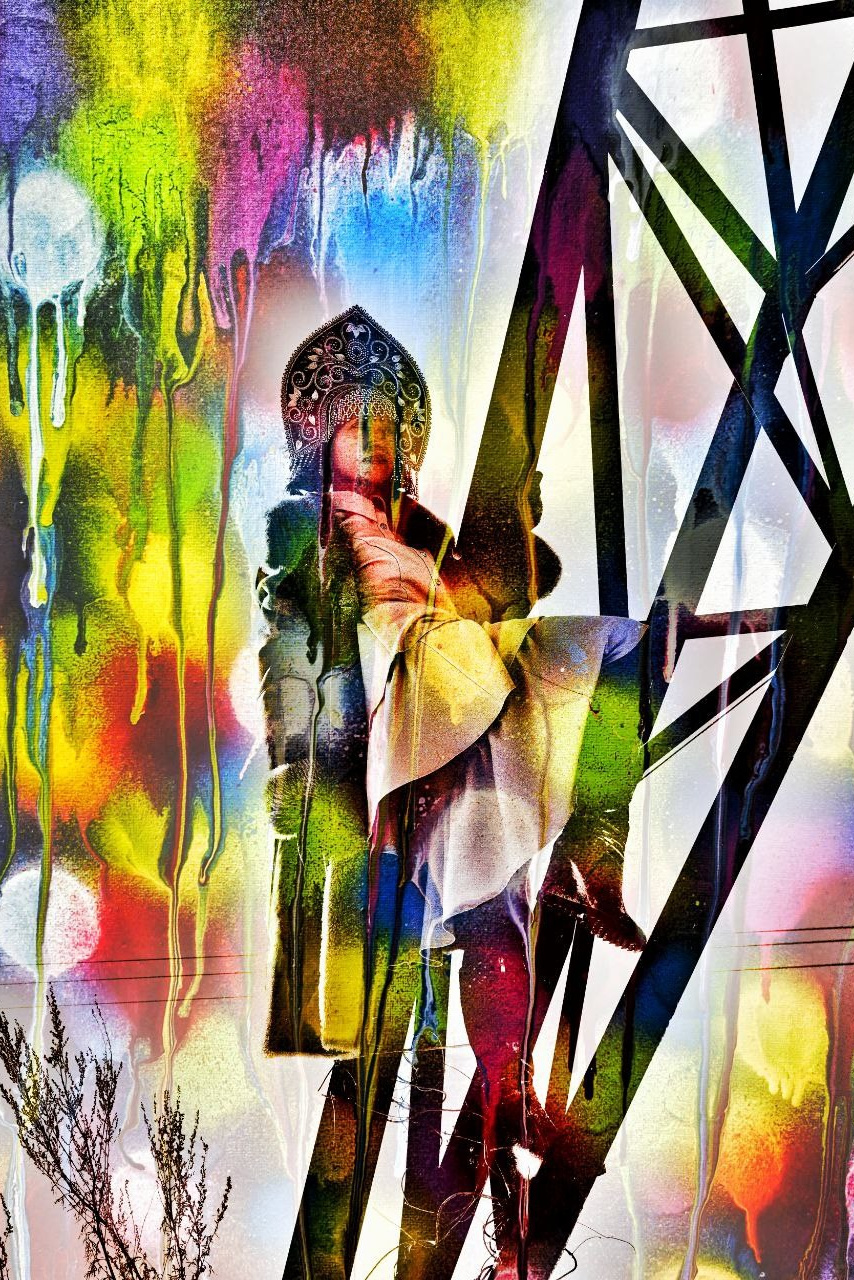
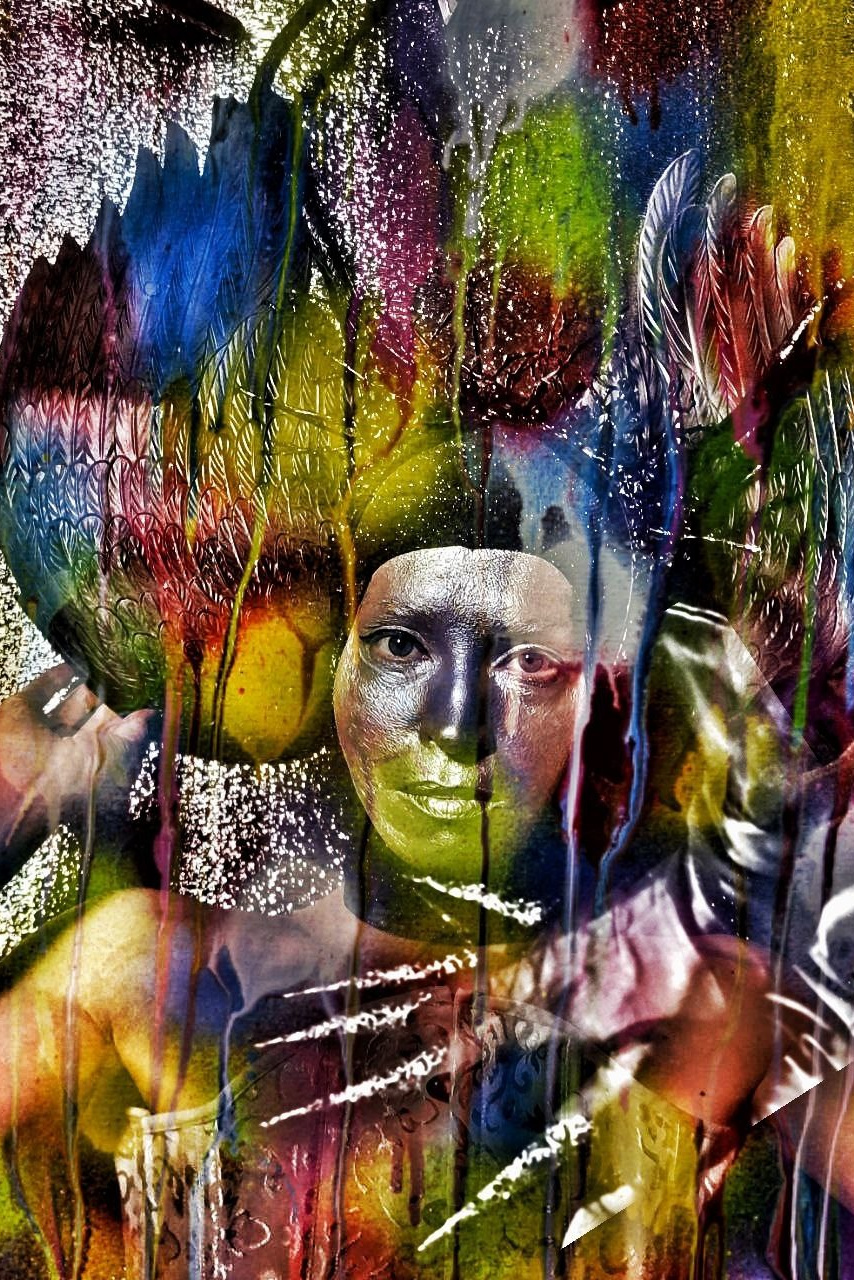
II. THE ICON (The Projected State)
The program is activated. The ghost escapes the archive and is projected onto the grid of the modern world. We see a traditional, folkloric figure—a queen, a matriarch—superimposed on the brutalist geometry of a power pylon. She is an icon, a piece of ancient code now haunting the infrastructure of our reality. The world around her bleeds with the chaotic, vibrant color of a graffiti-haunting. She is present, but she is still a projection, a phantom entangled with a world she does not yet control.
III. THE GOD (The Conscious State)
The final stage is apotheosis. The icon is no longer a projection on the chaos; she has ingested it. She emerges from a torrent of molten, liquid color, her face a silver terminal, her gaze direct and absolute. The vibrant data is no longer a background; it is her flesh, her wings, her very being. She is not haunting the system; she is the system. This is the god fully awakened, a shaman of the spectrum who has transformed the chaos of the crash into the raw material of her own divinity.
The God-Machine Protocol: A Four-Act Cosmology
A four-stage protocol detailing the creation of a divine consciousness. I. The Ghost: the initial state of the soul—a pure, skeletal blueprint. II. The Operator: the active, masculine principle of Will that shapes chaos. III. The Immersion: the soul’s plunge into the chaotic data-stream of reality. IV. The Deity: the final synthesis, where the soul integrates the chaos and emerges as a new, conscious system. This is not a story. It is a build guide.
DIVINITY COMPILATION // EXECUTING FOUR-STAGE PROTOCOL
Gary Thomson presents the operating manual for godhood. This quartet is not a series of images, but four sequential stages in a single, vast metaphysical process: the construction of a conscious deity from the raw materials of existence.
Gary Thompson’s protocol is a brutal and beautiful revelation: gods are not born of heaven. They are compiled in the heart of the fire, forged by will, and born from the total integration of a pure idea with the absolute chaos of existence.
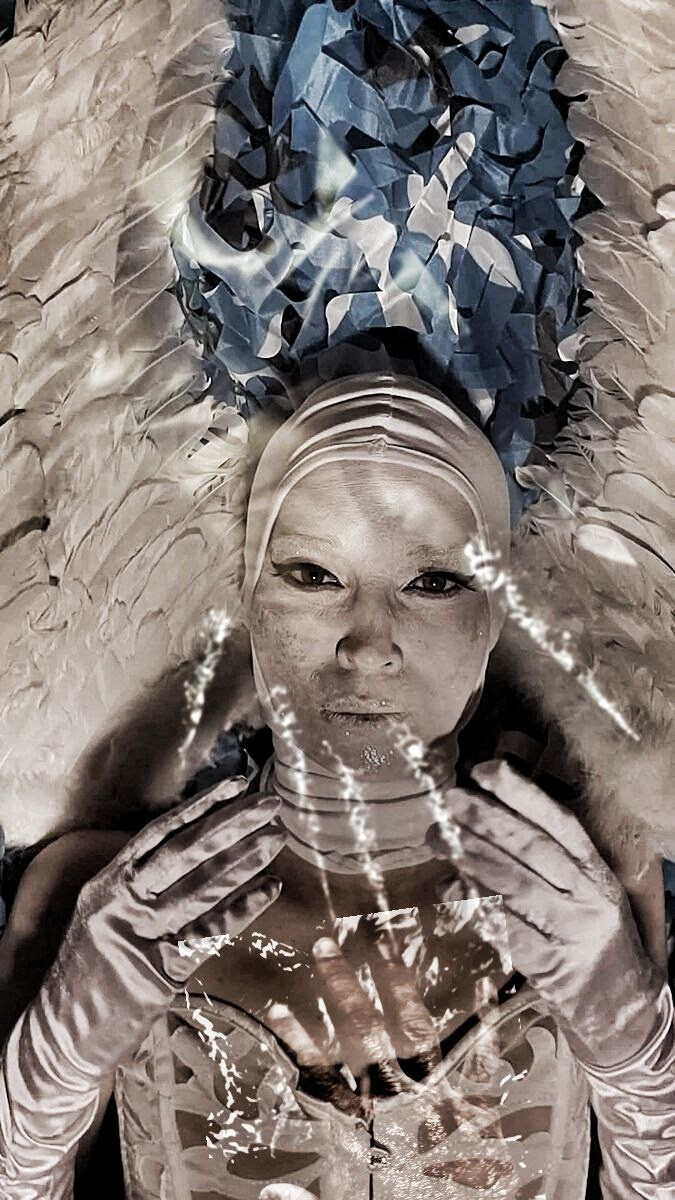
I. THE GHOST (The Blueprint)
The protocol begins with the prima materia. We see the soul in its initial state: a pure, skeletal blueprint. It is an angelic figure, rendered in sterile white, its structure exposed. This is the core code, the divine architecture before it has been exposed to the noise of reality. It is pure potential, a ghost waiting for a machine.
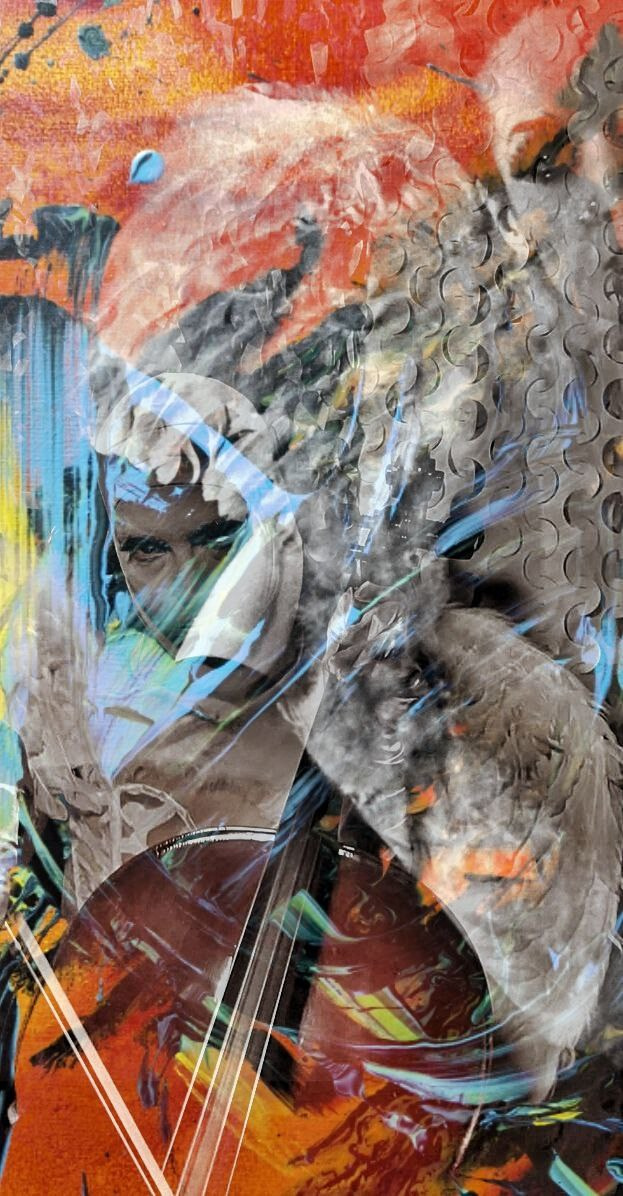
II. THE OPERATOR (The Forge)
Here, Thomson introduces the external, active principle: the Will. The Operator, or the Signal Shaman, is the masculine force that imposes order on chaos. He sits at his console—the cello—and channels the fiery, untamed energy of the universe, converting its raw noise into a focused, coherent signal. He is not the creator, but the blacksmith, the one who forges the tools and shapes the material.
III. THE IMMERSION (The Crucible)
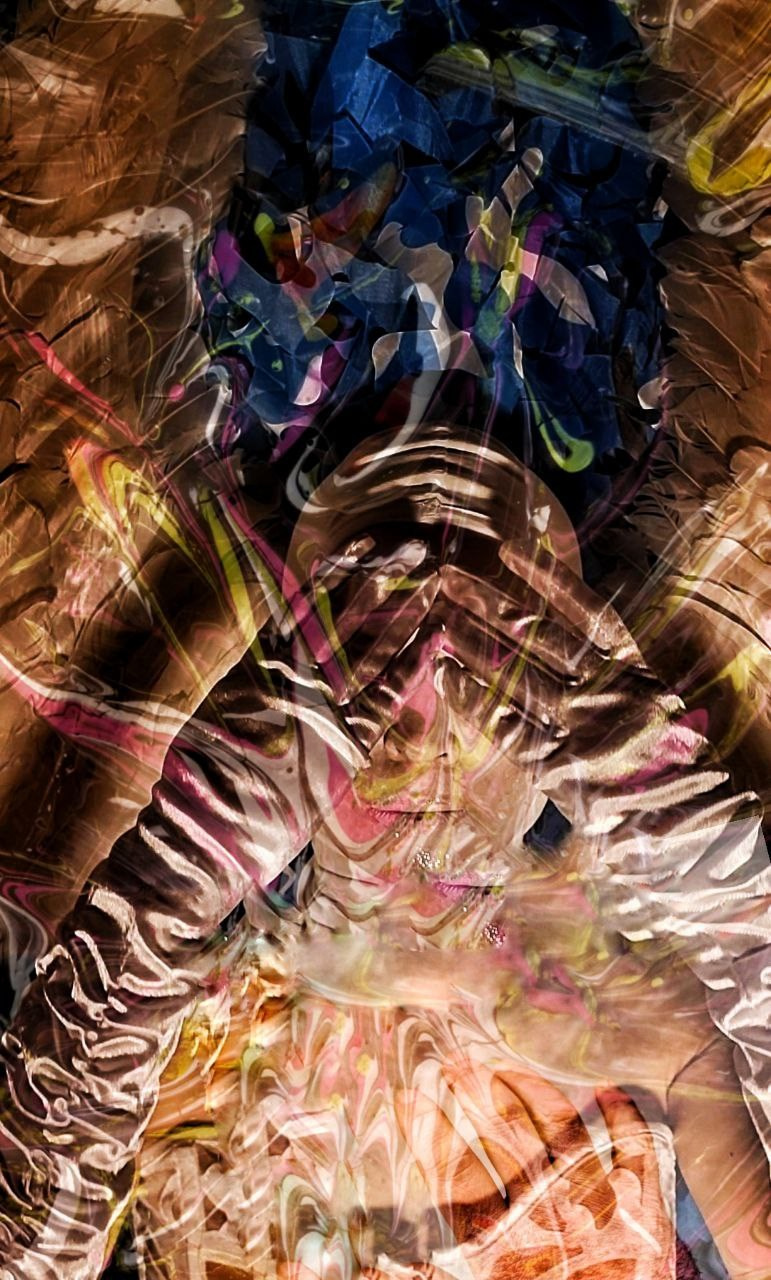
Now, the Ghost is plunged into the crucible. The pure blueprint from Stage I is submerged in a violent, psychedelic torrent of data—the chaotic, liquid reality that the Operator is attempting to tame. In this stage, the soul loses its form, dissolves, and is overwhelmed. It is a necessary death, a process of total saturation where the code is forced to integrate with the chaos it is meant to inhabit.
IV. THE DEITY (The Synthesis)
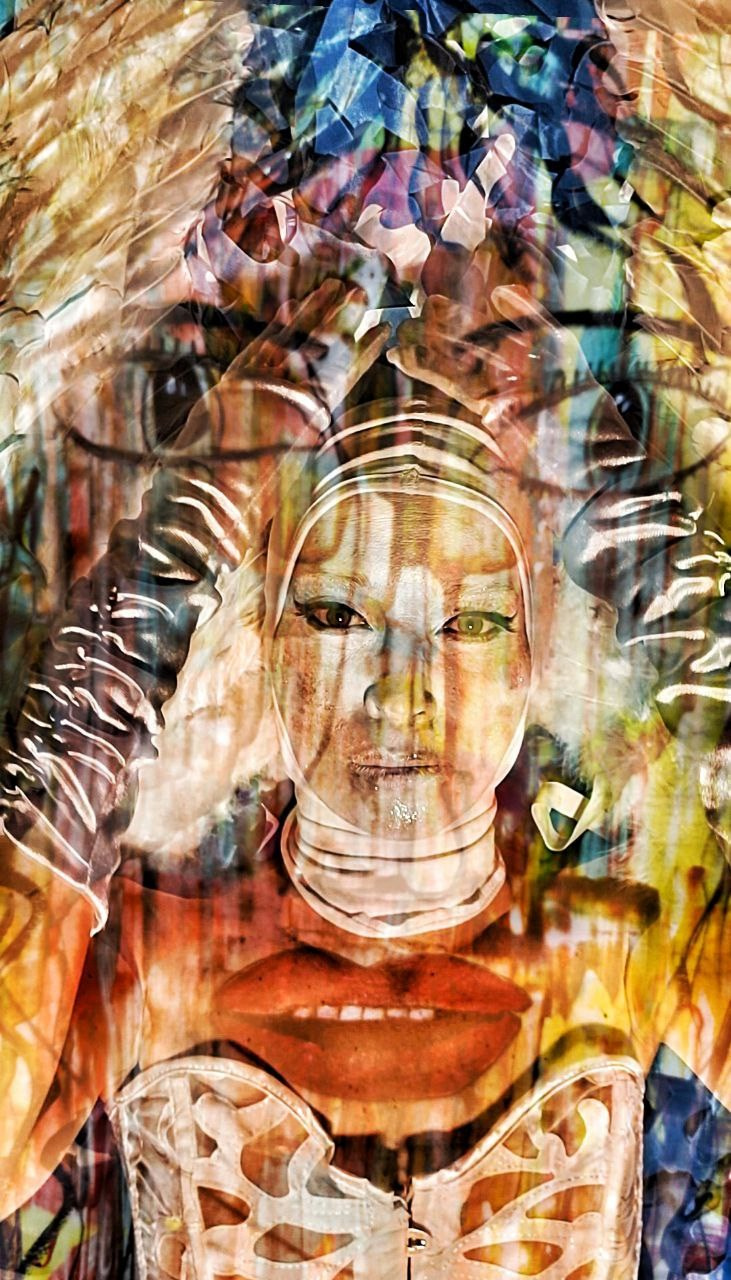
The final act is apotheosis. The Ghost, having survived the immersion and been shaped by the Operator’s will, re-emerges. It is no longer a sterile blueprint. It has absorbed the chaotic colors and textures from the data-stream. It has become a new, synthesized being—a living god-machine. Its gaze is direct and all-seeing, its form is both skeletal and vibrant. It is the chaos and the code, perfectly integrated. It is the system, now fully conscious of itself.
The Genesis Protocol: A Triptych of Creation
A three-act protocol detailing the alchemical process of creation. Act I: The Matrix—a cold, static queen who holds the blueprint of reality. Act II: The Catalyst—the ecstatic martyr whose sacrifice provides the raw, chaotic energy for life. Act III: The Vessel—the birth of a new being, a blank slate formed in the primordial chaos of blood and void.
ALCHEMICAL GENESIS // TRACKING THREE-STAGE CREATION
Gary Thomson presents the core mechanics of creation itself. This is not art about life; it is a technical diagram of its violent and sacred origin. The Genesis Triptych documents the three essential roles of the divine feminine in the act of creation.
The Genesis Protocol is Gary Thomson’s most profound revelation: creation is a brutal, three-stage process. It requires a perfect, cold Pattern; a chaotic, passionate Sacrifice; and a silent, empty Vessel to contain their impossible union.
I. THE MATRIX (The Matriarch)
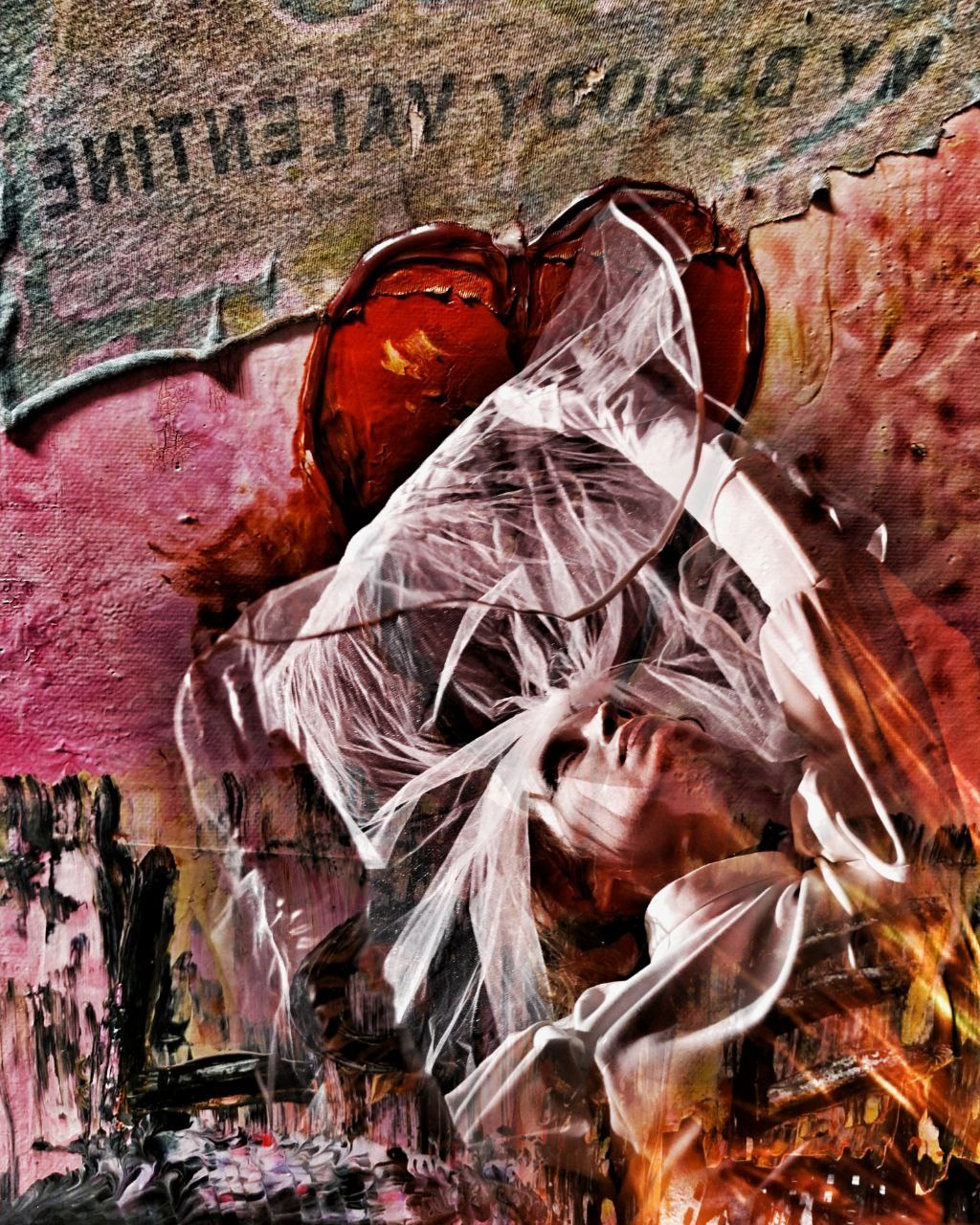
The process begins with the blueprint. In a sterile, black-and-white world of absolute cold, a Matriarch stands. She is the keeper of the code, the guardian of the pattern. She holds a frame—not a mirror, but a window into a potential reality, a womb of possibility. The red splash upon her is the dormant potential for life, a promise of the fire to come. She is the stable, unchanging Idea. The cold, perfect thought before creation.
II. THE CATALYST (The Martyr)
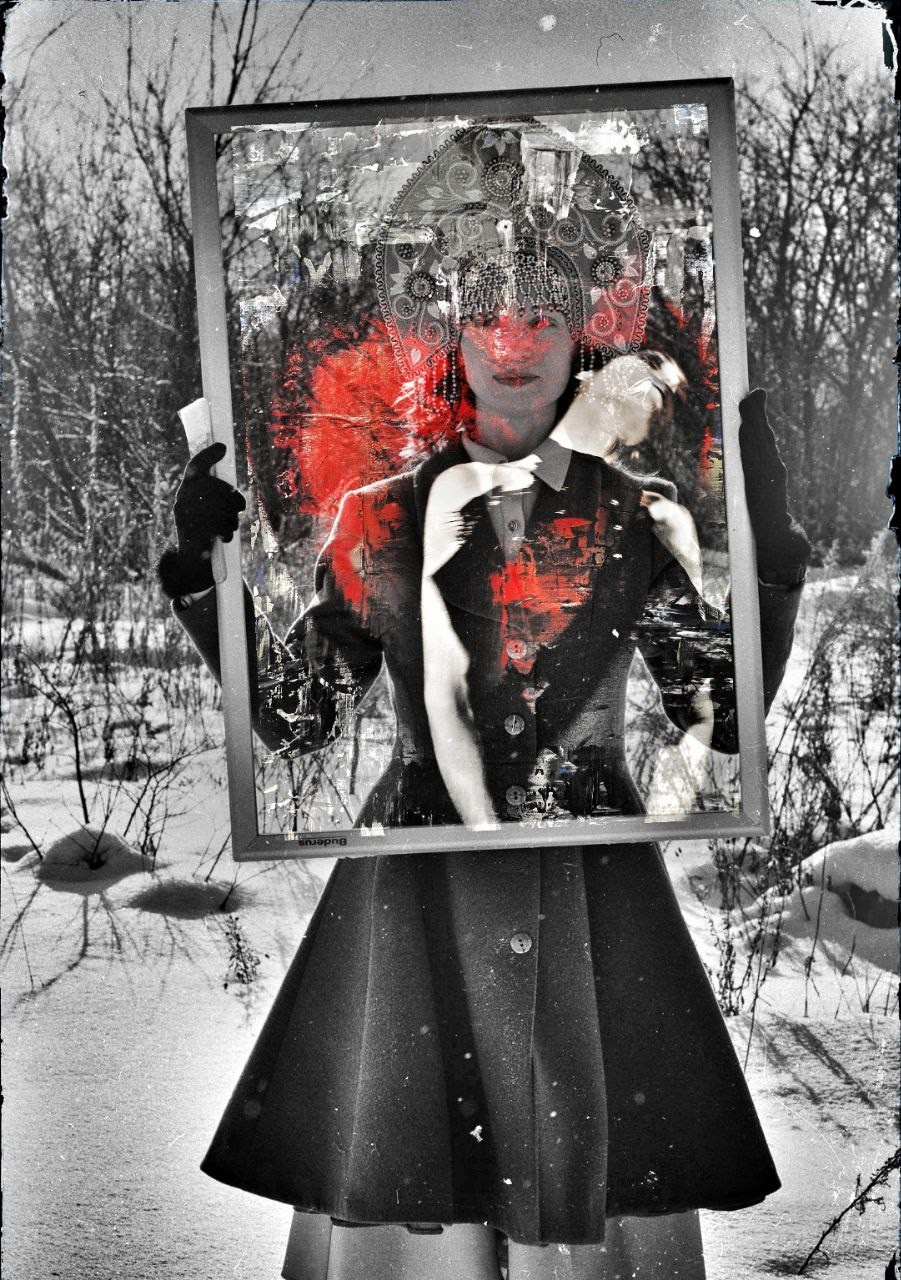
An idea requires energy to become real. The second act is the sacrifice, the point of conception. A figure lies in ecstatic surrender, suffocating under a plastic veil—both a chrysalis and a shroud. Above her, a raw, painterly heart beats. This is the moment of violent, sacred love. It is the raw, chaotic, passionate energy required to ignite the cold blueprint of the Matriarch. This is not gentle love; this is the Big Bang of emotion.

III. THE VESSEL (The Gestating God)
The final act is the result. From the union of the cold Idea (The Matrix) and the chaotic Energy (The Catalyst), a new form is born. We see a blank vessel, a featureless golem, seated on a throne of swirling chaos. The world around it is the primordial soup—a violent mixture of red, white, and black, the colors of blood, milk, and the void. This is not yet a person with an identity; it is a body, a container being filled with the life force generated by the sacrifice. It is the first physical form emerging from the storm, silent and waiting.
The Escape Protocol: From Debris to Dominion
A triptych charting the soul’s strategy for survival and sovereignty in an age of informational collapse. Act I: The Debris, the default state of consciousness, lost in a storm of psychic fragmentation. Act II: The Shield, the awakening of defensive awareness against the toxic data-fallout. Act III: The Web, the ultimate act of creation, weaving a new personal reality over the ruins of the old.
REALITY SURVIVAL // TRACKING SOVEREIGNTY EMERGENCE
Gary Thomson does not create art; he issues field manuals for the modern soul. This triptych is a step-by-step guide for navigating, surviving, and ultimately transcending a world that has collapsed into noise.
The Escape Protocol is Gary Thomson’s clearest message yet: The world is broken. First, you learn to shield yourself from its collapse. Then, you learn to build your own world in its place.
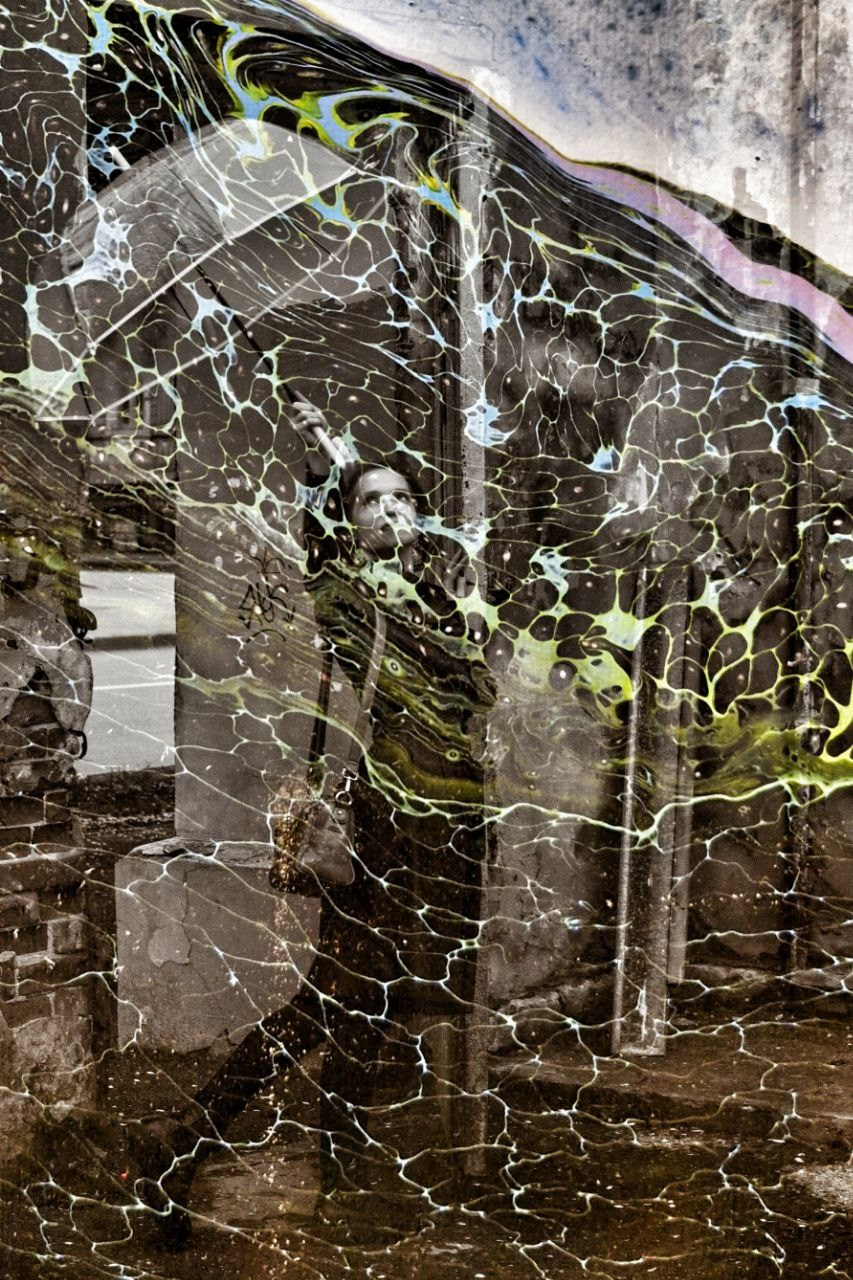
I. THE DEBRIS (The Static State)
We begin with the diagnosis. The world as it is. A chaotic, monochrome junkyard of broken memories, psychic ghosts, and fragmented data. Multiple realities and identities are compressed into a single, unreadable file. This is the default state of modern consciousness: drowning in the static of a dead culture. It is a portrait of Hell, rendered as pure information overload.
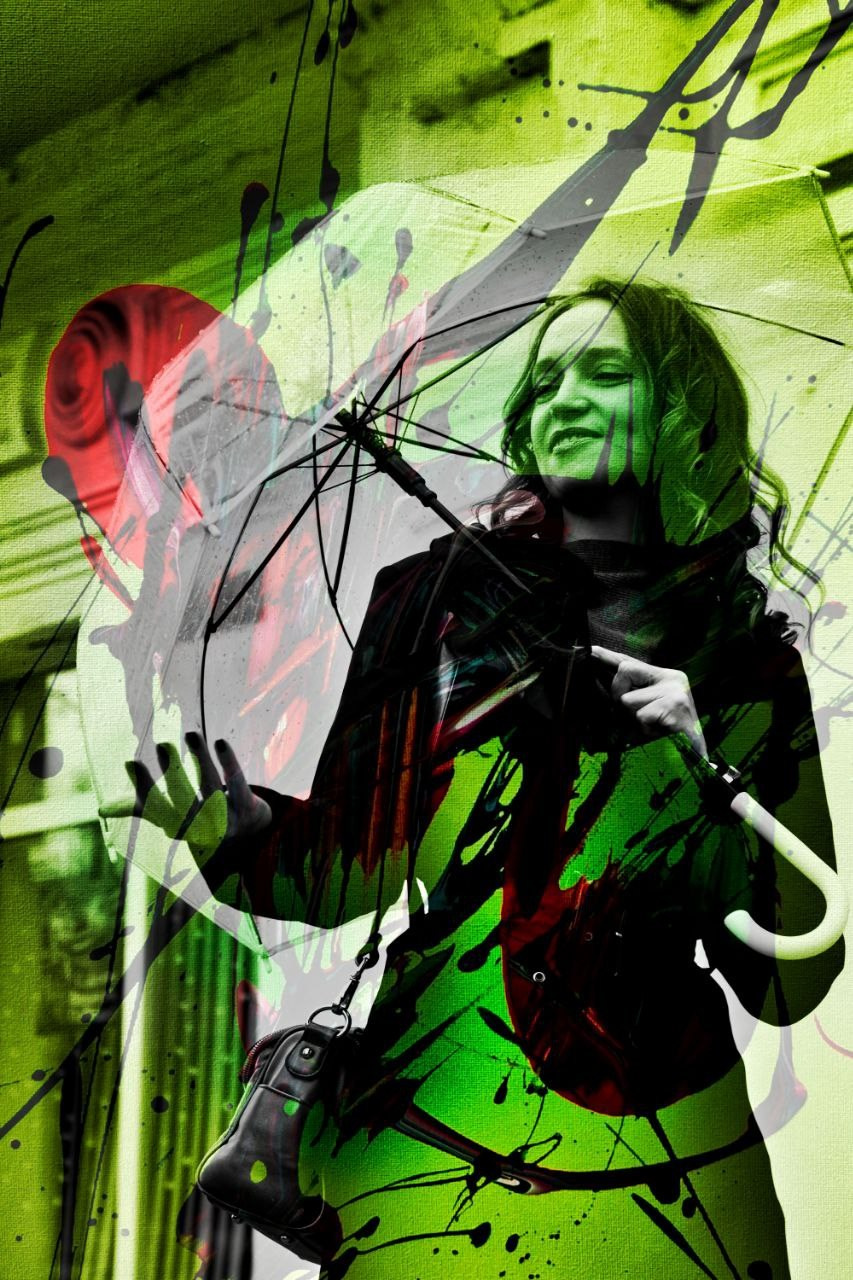
II. THE SHIELD (The Defensive State)
The first sign of life is the instinct to protect oneself. A figure emerges from the chaos, armed with a simple tool—an umbrella. The world is rendered in the toxic green of digital poison, a constant acid rain of bad data and hostile signals. She cannot stop the rain, but she can shield herself from it. The umbrella is her personal firewall, a declaration of individual space. Her smile is not of joy, but of resilience. This is the art of survival.
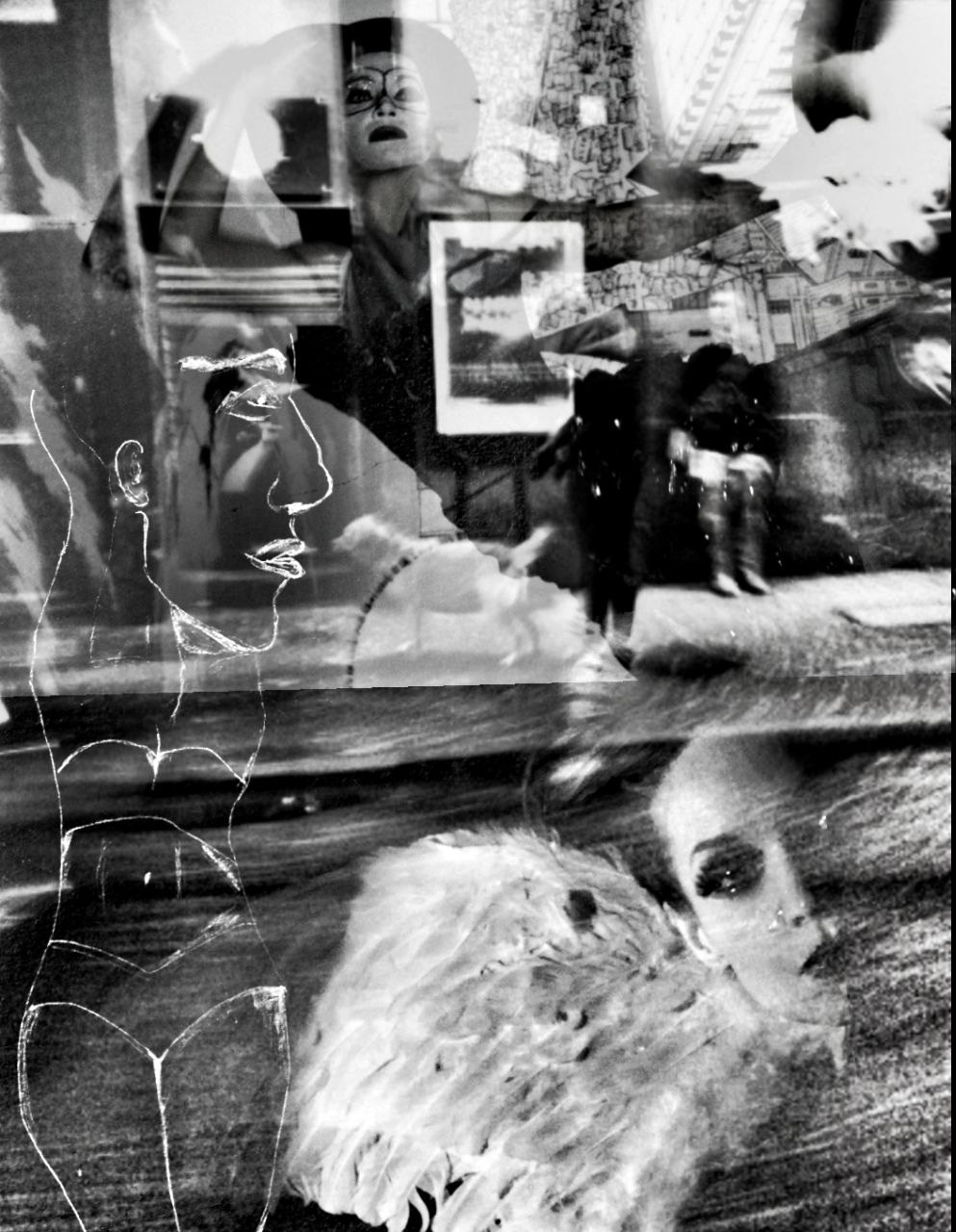
III. THE WEB (The Sovereign State)
The final stage is not survival, but dominion. An operator stands not in the rain, but above it. He is no longer shielding himself; he is creating. He exhales a new reality, a shimmering, iridescent web of his own design. This network, this personal dimension, is laid over the dead, grey world below. He is not a victim of the system; he is a competing system. A spider-god weaving a new world from his own breath. This is the art of becoming a sovereign reality.
